
Effektiv Schimmel an der Wand entfernen: Welche Möglichkeiten gibt es?
Inhalt
Schimmel an der Wand entfernen - So geht's richtig
Schimmelflecken an Wänden sind nicht nur ein optisches Problem, sondern können auch ernstzunehmende Schäden an der Bausubstanz sowie gesundheitliche Probleme verursachen. Besonders feuchte Räume wie Badezimmer, Küchen oder schlecht gelüftete Bereiche sind anfällig für Schimmelbildung. Damit die Schimmelpilze dauerhaft verschwinden, reicht es nicht aus, sie nur oberflächlich zu entfernen – auch die Ursache der eindringenden Feuchtigkeit muss beseitigt werden. In diesem Ratgeber erfährst du, wie du Schimmel an der Wand effektiv entfernst, Schimmelpilzen vorbeugst, warum Schimmel überhaupt entsteht, wie du ihn erkennst, wann ein Fachbetrieb hinzugezogen werden sollte und vieles mehr.
Schimmel an der Wand entfernen - Vorbereitungen
Bevor du mit der Schimmelentfernung an der Wand beginnst, solltest du dich ausreichend mit Schutzkleidung schützen, da sich Schimmelsporen leicht in der Raumluft verbreiten und gesundheitliche Probleme verursachen können. Trage eine FFP3-Atemschutzmaske, eine Schutzbrille, Schutzhandschuhe sowie einen Einwegoverall oder alte Kleidung, um den direkten Kontakt mit den Sporen zu vermeiden. Bereite den Raum für das Entfernen von Schimmel vor, indem du gut lüftest, aber die Türen geschlossen hältst, um eine weitere Ausbreitung zu verhindern. Besprühe die betroffenen Stellen mit einem Anti-Schimmel-Reinigungsmittel, bevor du Tapeten oder Verkleidungen entfernst, um das Aufwirbeln von Sporen zu minimieren. Verwende Einwegtücher, Lappen, Schwämme und Bürsten, die du nach der Reinigung entsorgst, um eine erneute Verbreitung zu vermeiden.
Schimmel an der Wand entfernen mit Schimmelentferner
Mit dem Baufix Schimmelentferner wirst du oberflächliche Schimmelpilze ganz einfach los – ohne komplizierte Vorbereitung oder beißenden Geruch. Der Reiniger enthält keinen Chlor, wodurch er weder gesundheitsschädliche Dämpfe noch unangenehme Gerüche verursacht. So kannst du sicher und effektiv Schimmel an der Wand entfernen, ohne durch Chlor Atemwege oder Materialien unnötig zu belasten.
- Sprühe den Schimmelentferner aus ca. 10 cm Entfernung auf die befallenen Stellen.
- Behandle auch angrenzende Bereiche im Umkreis von ca. 50 cm, um unsichtbaren Befall zu bekämpfen.
- Beachte die Einwirkzeit von einigen Stunden, damit der Entferner den Schimmel vollständig abtötet.
- Wische die abgetöteten Pilze mit einem feuchten Schwamm oder Lappen ab.
- und lass sie trocknen. Sprühe den Untergrund zur langfristigen Schimmelprävention erneut mit dem Schimmelentferner ein
- Nach dem vollständigen Trocknen kann die Wand wie gewohnt überstrichen oder tapeziert werden.
Schimmel an der Wand entfernen mit Hausmitteln
Es gibt verschiedene Hausmittel, um Schimmel an der Wand zu entfernen, doch nicht alle sind gleich effektiv. Hier sind einige bewährte Methoden mit ihren Vor- und Nachteilen:
Wasserstoff-peroxid
Wasserstoffperoxid (3 %-Lösung) wirkt als starkes Desinfektions- und Bleichmittel. Es entfernt Schimmel an der Wand und hilft dabei, dunkle Flecken auf Oberflächen aufzuhellen. Dadurch eignet es sich besonders für sichtbaren Schimmelbefall, der nicht tief in das Material eingedrungen ist.
Isopropyl-alkohol (70–80 %)
Isopropylalkohol hat eine stark desinfizierende Wirkung und kann Schimmel an der Wand entfernen. Die Substanz hinterlässt jedoch keine bleichende Wirkung, sodass Verfärbungen nach der Behandlung weiterhin sichtbar bleiben. Alkohol verdunstet schnell und sollte nur in gut belüfteten Räumen verwendet werden.
Brennspiritus (Ethyl-Alkohol)
Brennspiritus funktioniert ähnlich wie Isopropylalkohol und tötet Schimmelpilze effektiv ab. Allerdings entfernt Brennspiritus – genau wie Alkohol – keine dunklen Flecken, die durch den Schimmel entstanden sind. Auch hier ist eine gute Belüftung während der Anwendung wichtig.
Essigessenz – nur bedingt empfehlenswert
Oft wird Essigessenz als Reinigungsmittel zum Entfernen von Schimmel empfohlen, doch seine Wirksamkeit ist begrenzt. Zwar kann Essig oberflächliche Schimmelflecken lösen, doch die Sporen bleiben häufig erhalten und können sich erneut ausbreiten. Zudem kann Essigessenz auf kalkhaltigen Wänden sogar das Schimmelwachstum fördern, da Kalk mit Essigsäure reagiert und einen Nährboden für neue Schimmelbildung bildet.
Backpulver und Natron
Eine Paste aus Backpulver oder Natron mit Wasser kann helfen, oberflächlichen Schimmel zu entfernen. Die Mischung wird auf die betroffene Stelle aufgetragen, sollte eine kurze Einwirkzeit haben und wird anschließend mit einem Lappen abgewischt. Dabei sollte die Fläche mit klarem Wasser nachgespült werden, da Rückstände von Backpulver als Nährboden für neue Schimmelsporen dienen können. Diese Methode mit Backpulver oder Natron eignet sich allerdings nur für kleine, oberflächliche Schimmelstellen und ist keine Lösung für tiefergehenden Befall.
Fazit
- Während Wasserstoffperoxid, Alkohol und Brennspiritus wirksam beim Entfernen von Schimmel sind, haben Essig und Backpulver nur begrenzte Effekte. Wer tiefergehenden Schimmel an der Wand entfernen möchte, sollte besser auf stärkere Reinigungsmittel oder professionelle Lösungen setzen.
Wichtiger Hinweis
- Bei großflächigem Schimmelbefall solltest du immer einen Fachbetrieb hinzuziehen. Eine Fachfirma kann die genaue Ursache ermitteln und gezielte Sanierungsmaßnahmen ergreifen. Egal, ob kleiner oder großer Befall – nur die gründliche Beseitigung der Ursachen und das fachgerechte Entfernen von Schimmel durch einen Fachbetrieb verhindern dauerhafte Schimmelschäden.
Welche Wandfarbe verhindert erneuten Schimmelbefall?
Du hast den Schimmel an der Wand erfolgreich entfernt? Um nun erneuter Schimmelbildung vorzubeugen, gibt es spezielle Anti-Schimmel-Farben, die Feuchtigkeit regulieren oder schimmelhemmende Zusätze enthalten. Der richtige Anstrich kann dabei helfen, Schimmelwachstum langfristig zu verhindern:
- Silikatfarbe: Dank ihrer alkalischen Eigenschaften wirkt sie schimmelhemmend und eignet sich besonders für mineralische Untergründe.
- Farbe mit Fungiziden: Diese enthält chemische Wirkstoffe gegen Schimmelpilze, sollte aber nur in gut belüfteten Räumen verwendet werden.
- Feuchtigkeitsregulierende Farbe: Sie nimmt überschüssige Luftfeuchtigkeit auf und gibt sie langsam wieder ab, um Kondenswasserbildung zu verhindern.
Die BAUFIX Bad- & Küchenfarbe wurde speziell für Räume mit hoher Luftfeuchtigkeit entwickelt und bietet eine schimmelresistente Beschichtung, die Feuchtigkeit abweist und für ein gesundes Raumklima sorgt. Ein sorgfältiger Anstrich mit dieser Farbe kann die Schimmelbildung langfristig reduzieren.
Wann kann ich den Schimmel an der Wand selber entfernen?
Du kannst Schimmel an der Wand selbst entfernen, wenn:
1. Die befallene Fläche kleiner als 0,5 m² ist
Kleinere Schimmelflecken lassen sich mit geeigneten Mitteln wie dem Baufix Schimmelentferner sicher beseitigen.
2. Der Schimmel nur oberflächlich ist
Wenn der Schimmel nicht tief in Wände, Tapeten oder Putz eingedrungen ist, reicht eine Reinigung aus.
3. Die Ursache bekannt und behoben ist
Sind die Sporen durch kurzfristige Feuchtigkeit (z. B. nach falschem Lüften oder einem kleinen Wasserschaden) entstanden, kannst du ihn problemlos selbst entfernen.
Wann sollte Fachpersonal den Schimmel an der Wand entfernen?
In diesen Fällen ist eine Fachfirma für die Schimmelentfernung an der Wand gefragt:
1. Bei großflächigem Schimmelbefall (mehr als 0,5 m²)
Hier könnten tiefergehende Schäden an der Bausubstanz vorliegen.
2. Wenn der Schimmel wiederkehrt
Ein wiederkehrender Befall deutet auf ein ernsthaftes Feuchtigkeitsproblem hin, das unbehandelt langfristige Schimmelschäden verursachen kann.
3. Bei gesundheitlichen Beschwerden
Falls du Schimmelallergien oder Atemwegsprobleme hast, solltest du das Entfernen von Schimmel einem Fachbetrieb überlassen.
Schimmel an der Wand erkennen
Schimmel zeigt sich oft durch schwarze, grüne, weiße, gelbe oder rote Flecken sowie modrigen Geruch, der auf versteckten Schimmelbefall hinweisen kann. Feuchte Wände, sichtbare Wasserflecken oder abblätternde Tapeten sind weitere Anzeichen. Auch gesundheitliche Beschwerden wie Atemwegsprobleme, Kopfschmerzen oder Allergien ohne erkennbare Ursache können auf Schimmelpilze hindeuten.
Ursachen für Schimmelbildung
Liegt die Luftfeuchtigkeit dauerhaft über 60 %, begünstigt sie Schimmelwachstum, besonders in Küche, Bad und Schlafzimmer.
Gekippte Fenster und zu seltenes Stoßlüften führen dazu, dass feuchte Luft nicht entweichen kann. Dadurch steigt die Kondensation an kalten Oberflächen, was wiederum die Schimmelbildung und mögliche Schimmelschäden begünstigt.
Bei Raumtemperaturen unter 16 °C kann sich durch Kondensation Wasser an Wänden und Fenstern bilden.
Schlechte Dämmung, Wärmebrücken oder undichte Fenster sorgen für feuchte Wände.
Ein Rohrbruch, Risse im Mauerwerk, undichte Dächer oder Hochwasser hinterlassen Nässe, die Schimmel begünstigt. Das Problem sollte sofort behoben werden, da sich sonst langfristig Schimmelschäden entwickeln können, die nicht nur die Substanz angreifen, sondern auch die Gesundheit gefährden.
Stehen Möbel zu nah an kalten Außenwänden, kann die Luft nicht zirkulieren, und Feuchtigkeit sammelt sich dahinter. Außerdem sollten Heizkörper nicht verdeckt werden.
5 verschiedene Schimmelarten
Schimmel ist nicht gleich Schimmel! Es gibt verschiedene Schimmelarten, die sich in Farbe, Wachstum und Gesundheitsgefahr unterscheiden. Hier sind die häufigsten:
Schwarzer Schimmel
Besonders gefährlich, da er giftige Mykotoxine bilden kann; häufig auf feuchten Wänden, Tapeten oder Holz.
Grüner Schimmel
Wächst oft auf Lebensmitteln, Tapeten oder feuchten Polstermöbeln; kann allergische Reaktionen auslösen.
Weißer Schimmel
Schwer erkennbar, da er sich unauffällig in Wänden, Holz oder Papier versteckt; kann gesundheitliche Probleme verursachen.
Gelber Schimmel
Häufig auf Lebensmitteln, insbesondere Getreide und Nüssen; produziert gefährliche Giftstoffe (Aflatoxine).
Roter Schimmel
Tritt oft auf feuchten Tapeten, Holz oder Lebensmitteln auf; manche Arten dieses Schimmelpilzes können gesundheitsschädlich sein.
Welche gesundheitlichen Auswirkungen hat Schimmelbefall?
Schimmelpilze im Wohnbereich können die Gesundheit stark belasten, insbesondere bei Allergikern, Asthmatikern, Kindern und älteren Menschen. Schimmelsporen reizen die Atemwege und können Husten, Atemnot, Asthmaanfälle sowie Schleimhautreizungen in Augen, Nase und Rachen verursachen. Häufig treten auch allergische Reaktionen wie Niesen, Hautausschlag oder tränende Augen auf. Langfristiger Kontakt mit Schimmel kann zudem Kopfschmerzen, Müdigkeit und Konzentrationsprobleme auslösen. Bei geschwächtem Immunsystem besteht das Risiko ernsthafter Infektionen der Lunge oder anderer Organe. Besonders gefährlich sind Mykotoxine, die von manchen Schimmelarten produziert werden und bei längerer Exposition zu Organschäden führen können. Treten gesundheitliche Beschwerden ohne erkennbare Ursache auf, sollte ein Schimmelbefall in der Wohnung ausgeschlossen werden.
Schimmel keine Chance geben! - Vorbeugende Maßnahmen gegen Schimmelbildung
Um Schimmelbildung in Wohnräumen zu vermeiden, ist eine Kombination aus richtigem Lüften, Heizen und Feuchtigkeitskontrolle essenziell. Schimmel entsteht vor allem dort, wo Feuchtigkeit eindringen und nicht entweichen kann und sich an kalten Oberflächen niederschlägt. Durch gezielte Maßnahmen lässt sich dieses Risiko erheblich reduzieren.
Optimale Luftfeuchtigkeit und richtiges Lüften
Eine relative Luftfeuchtigkeit von 40–60 % ist ideal und kann mit einem Hygrometer überprüft werden. Regelmäßiges Stoß- und Querlüften senkt die Feuchtigkeit in Bad, Küche und Schlafzimmer. Fenster sollten mehrmals täglich für einige Minuten vollständig geöffnet werden, statt sie nur anzukippen.
Luftentfeuchter & Luftreiniger
Luftentfeuchter helfen bei dauerhaft hoher Luftfeuchtigkeit, indem sie Wasser aus der Raumluft ziehen. In schlecht belüfteten Räumen wie Kellern oder fensterlosen Bädern beugen sie Schimmel effektiv vor. Luftreiniger mit HEPA-Filtern reduzieren zusätzlich Schimmelsporen und Schadstoffe in der Raumluft.
Richtig Heizen
Ein gleichmäßiges Raumklima beugt Kondensation vor. Wohnräume sollten konstant auf eine Raumtemperatur von ca. 20 °C, weniger genutzte Bereiche auf mind. 17 °C beheizt werden. Starke Temperaturunterschiede zwischen Räumen begünstigen Feuchtigkeitsbildung. Türen zwischen unterschiedlich warmen Räumen sollten geschlossen bleiben.
Möbel richtig platzieren und Feuchtigkeitsquellen minimieren
Möbel sollten mind. 5–10 cm Abstand zu Außenwänden haben, damit die Luft dahinter zirkulieren kann. Feuchte Oberflächen nach dem Duschen oder Kochen sollten direkt abgetrocknet werden. In fensterlosen Bädern sind elektrische Lüfter eine sinnvolle Ergänzung, um die Luftfeuchtigkeit in Schach zu halten.
Bauliche Mängel beheben und vorbeugende Materialien nutzen
Feuchte Wände, schlechte Dämmung oder Rohrbrüche sollten frühzeitig beseitigt werden. Vorbeugend helfen Anti-Schimmel-Farben und spezielle Imprägnierungen in gefährdeten Bereichen.
FAQ - Häufig gestellte Fragen zum Entfernen von Schimmel
Schimmel in Silikonfugen ist oft hartnäckig. Kleinere Schimmelflecken können mit Alkohol (mind. 70 %), Wasserstoffperoxid oder einem Schimmelentferner behandelt werden. Bei starkem Befall sollten die Fugen entfernt und neu verfugt werden. Um Schimmelbildung zu vermeiden, sollte das Bad regelmäßig gelüftet und trocken gehalten werden.
Schimmel einfach mit einem neuen Anstrich zu überdecken ist keine Lösung – im Gegenteil, es kann das Problem sogar verschlimmern. Farbe verdeckt zwar die Flecken, jedoch bleiben die Schimmelsporen aktiv und finden weiterhin einen Nährboden zum Wachsen. Ohne den Schimmel an der Wand zu entfernen, die Ursache der Feuchtigkeit zu beseitigen und die betroffene Stelle gründlich zu trocknen, kommt der Schimmel früher oder später wieder durch.
Falls die Wand nach dem gründlichen Entfernen von Schimmel gestrichen werden soll, empfiehlt sich eine spezielle Anti-Schimmel-Farbe mit fungiziden oder feuchtigkeitsregulierenden Eigenschaften. Diese verhindert erneutes Wachstum, ersetzt aber nicht die eigentliche Bekämpfung des Schimmels.
Muffiger Geruch, feuchte Wände, abblätternde Tapeten oder gesundheitliche Beschwerden ohne ersichtlichen Grund können auf versteckten Schimmel hinweisen. Oft sitzt dieser tief in der Bausubstanz und bleibt lange unentdeckt. Fachleute können eine genaue Untersuchung durchführen.
Beim Entfernen von Schimmel werden Sporen freigesetzt, die gesundheitsschädlich sein können. Zudem enthalten einige Schimmelentferner Chlor, das reizend auf Haut, Augen und Atemwege wirken kann. Deshalb ist geeignete Schutzkleidung unerlässlich:
- Atemschutzmaske (FFP2 oder FFP3): Verhindert das Einatmen von Schimmelsporen.
- Schutzbrille: Schützt die Augen vor feinen Partikeln.
- Schutzhandschuhe: Verhindern den direkten Hautkontakt mit Schimmel und Reinigungsmitteln.
- Lange Kleidung und Schutzanzug: Vermeidet Hautkontakt und das Verschleppen von Sporen in andere Räume.
Nach dem Entfernen von Schimmel sollte die Schutzkleidung sorgfältig gereinigt oder entsorgt werden, um eine weitere Verbreitung der Schimmelsporen zu verhindern.
Weiterführende Informationen zum Thema Schimmel entfernen findest du auf den Webseiten des Umweltbundesamtes und der Verbraucherzentrale. Das Umweltbundesamt bietet umfassende Informationen zu den Ursachen, Gefahren und zur Bekämpfung von Schimmel in Innenräumen. Dort erfährst du, wie du Schimmelbefall erkennst, welche Maßnahmen zur Vorbeugung sinnvoll sind und welche Methoden zur Schimmelentfernung empfohlen werden.
Auch die Verbraucherzentrale gibt dir hilfreiche Tipps zum richtigen Lüften und Heizen. Zudem informiert sie über rechtliche Fragen rund um Schimmel in Mietwohnungen und zeigt, welche Rechte Mieter und Vermieter haben. Zusätzlich erhältst du praxisnahe Ratschläge zu geeigneten Reinigungsmethoden und effektiven Schimmelentfernern.
Besuche die offiziellen Seiten für detaillierte Informationen zum Thema Schimmel an der Wand entfernen.
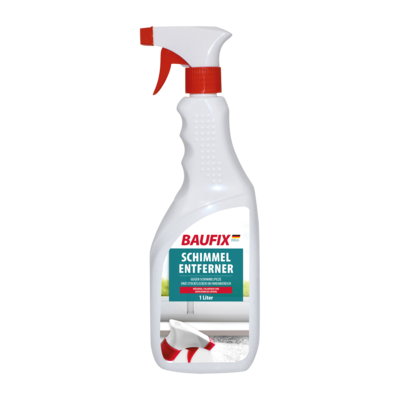
Unser Mittel zum Entfernen von Schimmel:
BAUFIX Schimmel-Entferner
- hochwirksam gegen Schimmelpilze und Stockflecken
- einsetzbar im Sanitär- und Wohnbereich
- geruchsmild
- ohne Chlor