

Fassaden streichen - Wir erklären euch wie's geht
Deine Hausfassade könnte einen frischen Anstrich vertragen? Das Streichen einer Putzfassade ist zwar aufwändig und erfordert eine gute Planung und Vorarbeit, lohnt sich aber in jedem Fall. Denn neben einer guten Optik dient Fassadenfarbe in erster Linie als Schutz vor Wind und Wetter. Für Fassaden, die besonderen Witterungen ausgesetzt sind oder deren Umfeld z.B. Algenbildung begünstigt, bietet BAUFIX spezielle Fassadenfarben mit entsprechend verstärkten Schutzeffekten an. Aber gute und robuste Farbe ist nicht alles: damit eure Fassade genauso aussieht, wie ihr euch das vorstellt, ist das korrekte Auftragen der Farbe unabdingbar. Fassade streichen leicht gemacht – wir zeigen euch wie!
Fassade streichen – Eine Anleitung Schritt für Schritt
Damit die Hausfassade wieder wie neu aussieht, muss vor und während des Farbauftrages einiges beachtet werden. Neben der richtigen Farbe von BAUFIX spielen das richtige Werkezeug, der richtige Zeitpunkt sowie eine sorgfältige Reinigung, Grundierung und sorgfältiger Farbauftrag eine Rolle.
Schritt 1: Das richtige Werkzeug: Was benötigst du zum Fassade streichen?
Zur Reinigung, die du vor dem Farbauftrag vornehmen solltest, bietet sich die Nutzung eines Hochdruckreinigers, oftmals in Kombination mit speziellem Moos- und Algenentferner an.
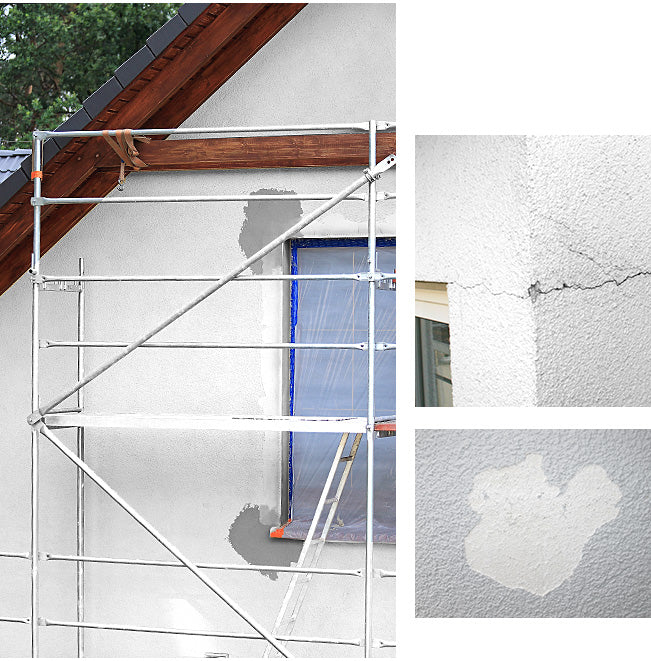
Für den neuen Anstrich benötigst du - neben ausreichend Farbe – einen Flachpinsel und einen guten Farbroller, der dir einen gleichmäßigen Anstrich ermöglicht. Mit einem Abstreifgitter kontrollierst du den Farbauftrag und vermeidest, dass du beim Fassade streichen übermäßig Farbe auf die Wand aufträgst. Um benachbarte Fenster, Regenrinne & Co. und sowie den Boden vor Farbe zu schützen, empfehlen wir euch alle nicht zu streichenden Teile der Fassade mit Klebeband abzukleben bzw. mit einer Abdeckplane abzudecken. Je nachdem, wie hoch deine Fassade ist, brauchst du außerdem vermutlich ein Gerüst.
Schritt 2: Die richtige Planung: Fassade streichen muss gut geplant sein
Die Fassade zu streichen ist ein zeitaufwändiger Prozess, für den du mehrere Tage einplanen solltest. Für die Vorbereitung solltest du mit ein bis zwei Tage rechnen. Der Vor- und Hauptanstrich dauert je nach Fassadenfläche mindestens zwei weitere Tage. Solltest du selbst kein Gerüst besitzen, kannst du dir in der Regel ein Gerüst zum Fassade streichen im Baumarkt gegen eine Gebühr ausleihen.
Tipp: Warte auf den perfekten Zeitpunkt zum Fassade streichen: Wenn die Sonne scheint, trocknet die Farbe zu schnell und die Streichansätze werden sichtbar. Die Außentemperatur sollte während der Verarbeitung und Trocknung über +5 Grad liegen (auch nachts). Die Luftfeuchtigkeit sollte nicht zu hoch sein, sodass der Anstrich trocknen kann.
Schritt 3: Die Vorbereitung: Fassade streichen richtig gemacht
Voraussetzung für eine perfekt gestrichene Fassade ist ein schmutzfreier Untergrund. Lose Farbe, Schmutz, Moos oder Bewuchs muss vor dem Anstrich sorgfältig entfernt werden. Hierzu bietet sich in der Regel der Gartenschlauch bzw. in hartnäckigeren Fällen der Hochdruckreiniger an. Für die Entfernung von Moos- und Algenbefall empfehlen wir die Vorbehandlung mit einem Moos- und Algenvernichter. Bitte beachte dazu die Verarbeitungshinweise. Nach der Behandlung kannst du Reste mit der Bürste entfernen.
Als nächstes prüfst du, ob du die Fassade vor dem Anstrich neu grundieren musst. Dafür bieten sich folgende drei Tests an:
- Wisch-Test:Wische mit deiner Hand über die gereinigte Fassade. Hast du danach Farbe auf der Hand, musst du sie vor dem Fassade streichen neu grundieren.
- Prüfung der Saugfähigkeit:Spritz dazu Wasser auf die gereinigte, trockene Fassade. Zieht es ein, musst du die Fassade vor dem Anstrich auch neu grundieren.
- Kratz- oder Klopftest: Kratze bzw. klopfe über die Fassade, um mögliche Hohlräume festzustellen. Bröselt der Putz, musst du bevor du die Fassade streichst, größere Stellen neu verputzen. Kleinere Risse kannst du mit Mörtel reparieren.
Platzt alte Farbe weg, entferne sie ganz mit dem Hochdruckreiniger oder Schleifgerät oder manuell mit einer festen Bürste. Im Anschluss kannst du damit beginnen, alle Fensterrahmen, Fensterbänke, Türen, etc. sorgfältig abzukleben, bevor es ans Fassade streichen geht.
Schritt 4: Der Anstrich: Fassade streichen - So geht’s
Für ein langanhaltendes Ergebnis wirst du die Fassade zwei Mal streichen müssen: einmal mit einem Vor- und einmal mit einem Deckanstrich. Je nach Bausubstanz ist eine Grundierung mit Tiefgrund nötig, die den Untergrund verfestigt. Für den Voranstrich kannst du die Fassadenfarbe je nach Produkt zwischen 5 % und 10% mit Wasser verdünnen. Den zweiten Anstrich, also den Deckanstrich, nimmst du mit unverdünnter Farbe vor. In den Verarbeitungstipps zu jeder unserer Fassadenfarben erfährst du, welche Angaben auf dein gewähltes Produkt zum Fassade streichen zutreffen.
- Was kommt zuerst? Zuerst streichst du die Fensterlaibungen, Ecken und Nischen – am besten separat vom Rest der Fassade. Hierzu benutzt du am besten einen Flachpinsel.
- Und dann? Für größere Flächen empfehlen wir zum Fassade streichen die Nutzung eines speziellen Fassadenrollers.
- Die richtige Maltechnik zum Fassade streichen: Rolle von oben nach unten, dann verstreich die Farbe kreuz und quer. Zum Schluss rolle wieder von oben nach unten. Streiche immer „nass in nass“. Trage die Farbe also zügig und überlappend auf. So vermeidest du Ansätze und sorgst für einen gleichmäßigen Farbauftrag.
- Trockenzeit: Je nach Produkt dauert es 8 bis 12 Stunden, bis der Voranstrich getrocknet ist. Erst danach nimm den Hauptanstrich vor.
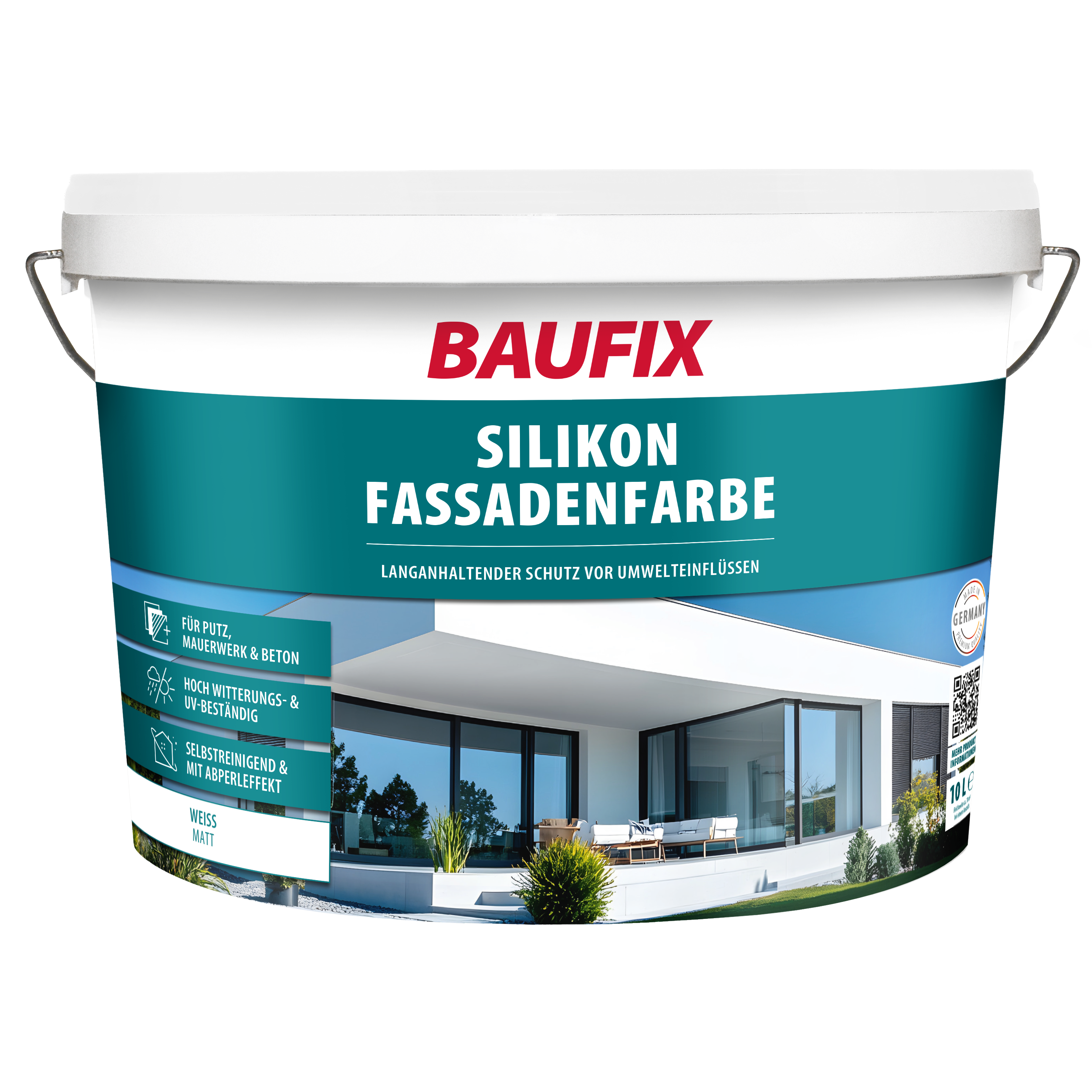
Unsere Fassdenfarbe: BAUFIX professional Silikon Fassadenfarbe
- Deckfähigkeit Klasse II
- Abriebbeständigkeit Klasse I
- Wetterbeständigkeit Klasse I
- selbstreinigende Farbe mit Abperleffekt
- dauerhaft weiß
- wasserdampfdurchlässig
- Extra-Schutz vor Algen durch "Anti-Grün"