
Wandfarbe grau - Trendfarbe richtig einsetzen
Inhalt
Wandfarbe Grau: Einrichtungstrends mit der Trendfarbe
Der Klassiker an der Wand ist immer noch Weiß, aber die traditionelle Wandfarbe bekommt ordentlich Konkurrenz. Die Wandfarbe Grau hat sich in den letzten Jahren zu einer beliebten Farbe für die Raumgestaltung gemausert, der sich stilvoll und dezent beinah zu jedem Einrichtungsstil zeigt. Das hat, wie wir finden, mehrere gute Gründe. Grau ist wunderbar flexibel und bringt helle Möbel ideal zur Geltung. Mit dem Farbton lassen sich eine skandinavische Wohnlichkeit sowie kuschelige Gemütlichkeit zaubern und dennoch wirken Grautöne immer zurückhaltend. Die Farben lassen sich vielseitig in hellen Nuancen und dunklen Farben an die Wand bringen. Wir verraten dir in diesem Beitrag, wie du Wohnzimmer, Schlafzimmer und Flur mit der Wandfarbe Grau einen frischen und eleganten Look verpasst, wie die Farbnuancen am besten wirken und wie du Grau richtig kombinierst, um eine ganz eigene Stimmung zu kreieren.
Wie wirkt die Wandfarbe Grau?
Grau ist eine beliebte Wandfarbe geworden, weil sie einem Raum eine gewisse Ruhe und Klarheit verleiht. Sie wirkt harmonisch und gemütlich und strahlt dennoch Eleganz aus. Im Gegensatz zu Weiß lässt das Grau Räume nicht trist oder zu steril wirken. Grautöne bringen vor allem Tiefe und setzen Möbel und Co. richtig in Szene. Von Grau als Hintergrund profitieren farbliche Akzente in Wohnräumen, die durch Grautöne noch besser zur Geltung kommen und deutlich hochwertiger wirken. Dunkelgraue Töne aus der Farbpalette verstärken diesen Effekt. Wenn du mit der Wandfarbe Grau arbeiten möchtest, solltest du bei der Auswahl ein paar Dinge beachten, denn die Farbpalette ist groß. Es gilt das Motto: Grau ist nie gleich Grau.
Exkurs: Was ist damit gemeint, dass Grau nicht gleich Grau ist? Meist nehmen wir nur Nuancen von Farben wahr, die „unbunt“ sind und gestrichen „ungesättigt“ daherkommen. Ein Beispiel ist ein Blauton, der mit geringer Sättigung Grau erscheint, aber immer noch blau-stichige Pigmente besitzt. Ob schlammgrau, seidengrau oder beigegrau – Wandfarben Grau sind in der Regel nur Graunuancen und zeigen sich als unterschiedliche Grautöne in einer großen Auswahl, die jeweils andere Raumwirkungen hervorrufen.
Wirkung von Dunkelgrau als Wandfarbe
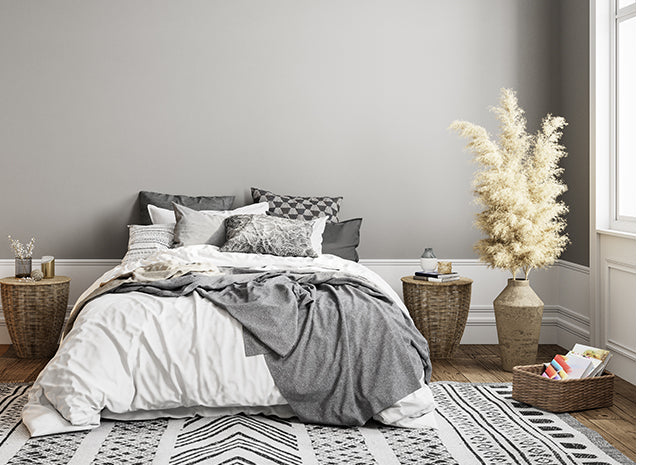
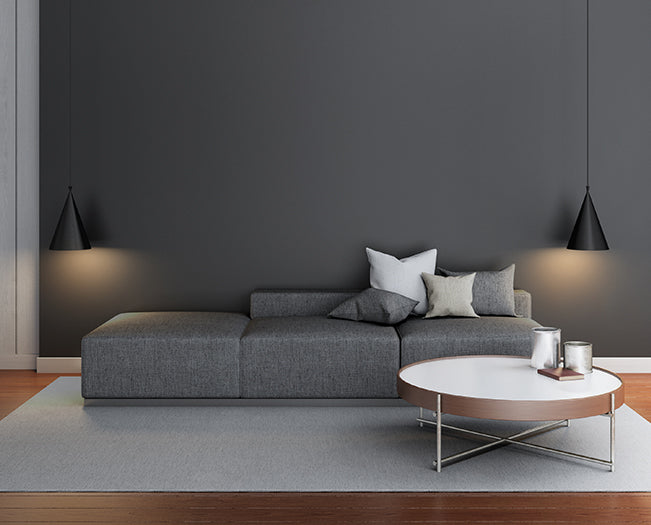
Dunkle Grautöne sollten vorwiegend in größeren Räumen zum Einsatz kommen, da sie die Wände „näher“ wirken lassen, was in kleinen Zimmern schnell erdrückend sein kann. Davon profitieren hingegen längliche Räume, wie zum Beispiel Flure. Wer dennoch nicht in einem kleinen Raum auf eine dunkle Farbnuance verzichten möchte, sollte mit einem Kontrast zwischen hellen und dunklen Graunuancen spielen oder Akzente mit einer Akzentwand setzen. Ein Trick, um eine gemütliche Atmosphäre zu schaffen, ist es die Kanten am oberen Rand der Akzentwand in Weiß zu streichen und so einen Streifen von wenigen Zentimetern zu malen. Die restliche Fläche wird in der dunklen Wandfarbe Grau gestrichen.
Dunkle Grautöne wirken aus der Farbpalette zudem immer elegant und edel. Idealerweise lässt du dazu helle Möbel sowie Deko-Elemente einfließen und hast in den Räumlichkeiten große Fensterfronten für ausreichend Tageslicht. Nischen mit Akzentwänden gestaltet profitieren ebenso von der Wandfarbe Grau und können mit den richtigen Elementen wie Pflanzen zu einem stilvollen Hingucker werden.
Wirkung von Hellgrau als Wandfarbe
Helle Grautöne sorgen besonders in Fluren für mehr Weite, Gemütlichkeit, lassen den Raum offener und einladender wirken. Die helle Wandfarbe Grau wir häufig genutzt, um den skandinavischen Wohnstil zu unterstreichen. Auch der Landhausstil gelingt mit den Nuancen der verspielten Grautöne besonders gut. Bei dem Farbton kannst du sowohl eine rustikale Einrichtung als auch dezente Wohnaccessoires zum Einsatz bringen. Streiche helle Wandfarben Grau, so gewinnen kleine Räume optisch an Größe.
Womit lässt sich die Wandfarbe Grau kombinieren?
Graue Wandfarbe sich gut kombinieren, denn wie eingangs bereits erwähnt, hebt Grau die Einrichtung hervor. Zum Beispiel zeigen sich kühle Grautöne in Zusammenspiel mit Pastell-Tönen als tolle Idee. Für Behaglichkeit sorgt die Wandfarbe Grau mit Stoffen und Texturen wie Leinen, Möbeln in Weiß, aber auch in natürlicher Holzoptik. Richtig Pep und Raffinesse schaffst du mit farbigen Kontrasten zu den Grautönen. Ein harmonisches Gesamtbild bilden hier Töne wie Blau, Rot und Gelb, aber auch dunkle Töne wie ein Curry-Ton mit hoher Farbintensität oder ein edles Bordeauxrot. In Kinderzimmern oder Arbeitsräumen schaffst du einen natürlichen Look, indem du die Wandfarbe Grau mit einem Rosa- und Grünton kombinierst. Hier machen sich zudem Zimmerpflanzen und viel Holz besonders gut.
Welche Möbel zu grauer Wand?
Zur Wandfarbe Grau passen sowohl weiße Möbel als auch ein Einrichtungsstil mit Holzelementen. Möbel lassen sich mit Kreidefarbe farblich neu gestalten. Gerade Holz sorgt für eine gemütliche Atmosphäre, während weiße Akzente den typischen Scandi-Look zaubern. Wer es gerne etwas farbig und modern mag, kann auch auf blaue Kontraste setzen und rosafarbene Wohnaccessoires nutzen. Auch Möbel aus Edelstahl oder Metall machen zur Wandfarbe Grau eine gute Figur.
Wie unterscheiden sich die Nuancen bei der Wandfarbe Grau?
Die Wandfarben bekommst du in unterschiedlichen Farbanteilen und du hast mit den Mischungen eine unvergleichliche Vielfalt. Je nach Wahl kann sich die Wandfarbe Grau mit einem Unterton von Blau, Braun, Gelb, Rot oder Grün zeigen. Damit entstehen entweder ein helles Grau wie Hellgrau oder ein kühler Unterton. Eine passende Graunuance sollte daher immer in Abstimmung mit Ihrem Einrichtungsstil getroffen werden.
- Bläuliche Pigmente in der Wandfarbe Grau wirken klar und lässt sich mit hellem Grau verbinden. Auch Holz funktioniert gut. Die Farben mit blauem Unterton sind die idealen Begleiter für Wandfarben in der Küche oder als Wandfarbe im Schlafzimmer.
- Wandfarben mit roten oder gelben Pigmenten strahlen Wärme und Geborgenheit aus und sollten demnach vorwiegend mit kühlen und blaustichigen Elementen in Harmonie gebracht werden.
- Ein Greige (Mischung aus Grau und Beige) wird gerne an die Wand gebracht, wenn es wohnlich und dennoch elegant werden soll. Ein helles Sofa und rustikale Möbel sind stylishe Partner und auch ein Mix aus Rot und Weiß zeigt bei der Wandfarbe Grau sein Können.
Generell lassen sich ganze Wände grau streichen oder du nutzt den Ton, um einen Raum mit Akzentwänden aufzupeppen. Wenn du eine ganze Wand grau streichen möchtest, können diese mit Bildern und Deko-Elementen gebrochen werden. Pflanzen eignen sich ebenso.
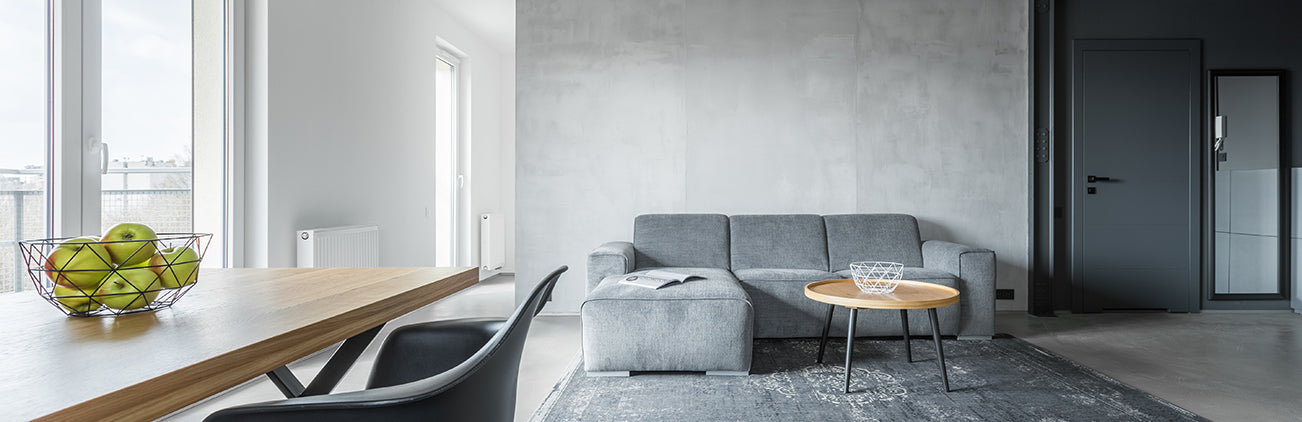
Nachfolgend wollen wir dir die wichtigsten Tipps an die Hand geben, die du beachten solltest, wenn du ein Zimmer grau streichen möchtest:
- Entscheidest du dich für Dunkelgrau, dann achte auf eine saubere Verarbeitung.
- Kaufe hochwertige Innendispersion-Farben wie die BAUFIX Ultra Deckfarbe.
- Beginne beim Streichen der Grautöne von zwei Farbtönen immer mit der Helleren an den Kanten und male erst dann mit dem dunkleren Grauton darüber.
- Greife lieber auf bereits fertig gemischte Graunuancen zurück, wie die BAUFIX Farbakzente.
- Vor dem Beginn die Wandfarbe Grau gut durchrühren, sodass sich alle Farbpigmente gleichmäßig verteilen. Ein Farbrührgerät leistet gute Dienste.
- Starte mit senkrechten, überlappenden Bahnen und arbeite dich dann mit der Farbrolle horizontal vor.
- Nutze passendes Zubehör wie Pinsel, Farbroller, Malerkrepp und Abdeckfolie, um die Wandfarbe Grau anzubringen.
- Eventuell ist ein zweiter Anstrich mit der Wandfarbe Grau nötig, damit die vollständige Abdeckung gewährleistet ist. Achte beim Kauf der Innenfarbe auf eine hohe Deckkraft wie bei unserer BAUFIX professional Easy Clean Strapazierfarbe mit hoher Deckkraft nach DIN EN 13300 bei 7 m²/l
Einrichtungstrend: Graue Beton-Optik
Ein echter Trend ist die Betonoptik, die in jedes Zuhause den Industrie-Look bringt. Die Wirkung mit der besonderen, grauen Wandfarbe ist ein echtes Highlight. Der Beton-Look gelingt mit speziellen Effektfarben wie der BAUFIX Farbakzente, die als fertig abgetönte und seidenmatte Dispersionsfarbe schnell den beliebten Anstrich an Wände und Decken im Innenbereich bringt. Die Wandfarbe Betongrau ist bereits gebrauchsfertig, kann aber auch gemischt werden, ist lichtecht und farbkräftig.
Gehe beim Auftragen am besten in zwei Schichten vor. Zunächst trage als Untergrund eine Grundspachtelmasse auf und glätte diese. Danach erfolgt der Anstrich und die typische strukturierte Betonoptik entsteht. Etwas einfacher und auch für Mietwohnungen geeignet ist es, die Wände mit Struktur-Profitapeten zu tapezieren und die Effektfarbe aufzutragen.
So hast du schnell und einfach ein echtes Loft in den eigenen vier Wänden. Mit unserer Auswahl gelingt garantiert jedes Wohnprojekt und den grauen Highlights steht nichts mehr im Weg.
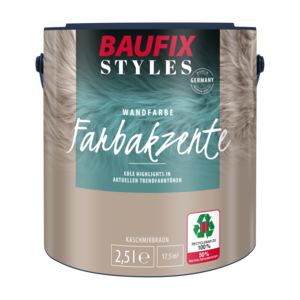
Unsere graue Wandfarbe: BAUFIX STYLES Farbakzente
- edle Highlights in aktuellen Trendfarbtönen
- für Wände und Decken im Innenbereich
- lichtecht und strapazierfähig
- Nassabriebbeständigkeit Klasse 3
- Deckkraft Klasse 2
- Farbtöne sind gebrauchsfertig und untereinander mischbar