
Holzöl -
Vorteile, Unterschiede, Verarbeitungstipps
Inhalt
Was ist Holzöl?
Holzöle, wie zum Beispiel unser BAUFIX Holz-Pflegeöl, sind spezielle Pflegemittel, die Holzoberflächen im Innenbereich oder Außenbereich pflegen und schützen. Dabei können dieses aus natürlichen oder synthetischen Inhaltsstoffen bestehen. Natürliche Holzöle oder Pflegeöle auf Basis pflanzlicher Inhaltsstoffe sind für den Innenbereich gut geeignet, da sie gesundheitlich unbedenklich und weniger harten Bedingungen ausgesetzt sind. Im Außenbereich muss die Holzoberfläche vor zahlreichen Witterungseinflüssen geschützt werden, darunter Feuchtigkeit und UV-Strahlung. Das verlangt dem Holzschutz einiges mehr ab. Entscheide dich daher vor dem Kauf für welchen Anwendungsbereich du den Holzschutz benötigst.
Welches Holzöl ist für welches Holz geeignet?
Holz ist ein beliebtes Material und kommt sowohl im Innenbereich als auch im Außenbereich zum Einsatz. Holzmöbel auf der Terrasse, Terrassendielen, Holzfußböden oder Parkett in Räumlichkeiten – die Optik des natürlichen Baustoffs überzeugt. Damit sich Holzoberflächen lange von ihrer schönsten Seite präsentieren, ist eine regelmäßige Pflege wichtig. Holzöle pflegen das Holz, machen es widerstandsfähiger gegenüber Feuchtigkeit, Hitze, Kälte und mechanischer Beanspruchung und lassen sogar die farbliche Schönheit der Maserung wieder ganz neu erstrahlen. Damit auch du deine Gartenmöbel und Co. mit der richtigen Holzpflege gegenüber äußeren Einflüssen wappnest, die Holzoberflächen nährst und der Maserung zu neuem Glanz verhilfst, verraten wir dir nachfolgend alles, was du zum Thema Holzöle wissen musst.
Natürliche Holzöle
Die natürlichen Produkte bestehen aus natürlichen Inhaltsstoffen wie Baumharz. Gleichzeitig haben sie keine Zusätze von Lösungsmitteln oder anderen bedenklichen Stoffen. Da Holzoberflächen in Räumlichkeiten wie Parkett oder Holzmöbel keinen strapazierenden Einflüssen ausgesetzt sind, geht es hier darum das Holz zu pflegen, Feuchtigkeit zu spenden und die Farbe aufzufrischen. Das hebt wiederum die Maserung hervor und macht das Holz optisch ansprechend.
Leinöl
Leinöle basieren auf dem pflanzlichen Öl und sind damit unbedenklich. Schon seit Ewigkeiten ist das Leinöl der Allrounder, wenn es um die Pflege sämtlicher Holzarten geht. Es lässt sich selbst in der Küche ohne Probleme zum Einsatz bringen. Eine Wellnessbehandlung für den Untergrund mit Leinöl bringt die Maserung wieder zum Vorschein und schützt vor feuchter Nässe.
Ferner finden sich in dem natürlichen Holzschutz Inhaltsstoffe wie Orangen- oder Zitrusschalenöle oder Bienenwachs, was dafür sorgt, dass die Schutzschicht noch fester wird.
Eine besondere Variante ist das Leinölfirnis. Im Gegensatz zu Leinöl ist es mit Trocknungsmitteln und weiteren Zusatzstoffen angereichert, damit zähflüssiger und bildet eine Schutzschicht auf dem Untergrund. Zudem dringt es weniger tief in das Holz ein, sorgt dafür aber für einen höheren Schutz gegenüber Feuchtigkeit.
Hartöle
Diese Öle sind auf Basis von Leinöl, Nussöl oder Tungöl, denen gelöste Kunst- oder Naturharze beigemengt werden. Das sorgt dafür, dass Hartöle schneller trocknen und aushärten. Ein Leinöl hat in der Regel eine sehr lange Trocknungszeit, was hier wegfällt. Gleichzeitig härten sie stärker aus und dringen tief in das Holz ein. Wichtig ist es, dass die Hartöle in mehreren Schichten mit einem Lappen aufgetragen werden. Vorwiegend kommen die Holzöle im Innenbereich für strapazierte Holzoberflächen zu Einsatz. Doch vorsichtig: Der Begriff „Holzschutzöl“ ist nicht geschützt und so gibt es mitunter Öle, denen gesundheitlich bedenkliche Stoffe beigemischt werden.
Hartwachsöle
Hartwachsöle sind eine Kombination aus Ölen wie Sonnenblumen-, Distel- oder Sojaöl und enthalten zusätzlich Wachs, in der Regel Carnaubawachs, das aus der Carnaubapalme in Brasilien gewonnen wird. Der Unterschied zu den Hartölen liegt darin, dass in diesen keine Wachse enthalten sind. Während Hartöle tiefer in das Holz eindringen, legen sich Hartwachsöle wie eine Schutzschicht auf das Holz, imprägniert es und machen die Holzmöbel widerstandsfähiger und weniger anfällig für Risse oder andere Schäden. Durch die Wachse der Holzpflege erhält auch die Holzoberfläche einen stärkeren, optischen Glanz. Bestens geeignet für Holzböden und Möbel im Innenbereich ist das BAUFIX Hartwachs-Öl. Es bildet eine wasserabweisende Oberfläche auf Holzböden und Möbelstücken und lässt diese dennoch weiterhin atmen.

Holzöl und seine vielseitige Anwendung
Je nachdem welche Aufgabe das Holzöl übernehmen soll, gibt es unterschiedliche Variante der Möbelöle.
Welches Holzöl kann ich für innen benutzen?
In Räumlichkeiten übernehmen Holzöle eine pflegende Aufgabe. Hier besteht für Möbelstücke und Holzböden keine Gefahr vor Witterungseinflüssen. Lediglich durch den täglichen Gebrauch können diese strapaziert werden. Daher sollte die Holzpflege in dem Fall aus rein natürlichen Inhaltsstoffen bestehen, frei von Lösungsmitteln und anderen Zusätzen sein. Leinöle oder Hartwachsöle sind hier die idealen Begleiter, wenn man das Holz ölen möchte. Diese lassen sich damit selbst bedenkenlos in der Küche für die Arbeitsplatte oder gar zur Pflege von Holzspielzeug anwenden. Achte jedoch immer auf die Deklaration oder nutze beispielsweise das BAUFIX Hartwachs-Öl, das selbst für Massivmöbel oder Mahagoni anwendbar ist. Speziell für die Holzart Teak findest Du das BAUFIX Gartenholz-Pflegeöl.
Welches Holzöl kann ich außen benutzen?
Im Außenbereich kommt schon einiges mehr auf das Holzöl zu. Hitze, Kälte oder UV-Strahlung setzen Holz stark zu, sodass Gartenmöbel, Holzfußböden der Terrasse oder Fassaden mit einem Holzöl behandelt werden müssen. Nur so ist dieses vor Witterungseinflüssen, Austrocknen und Vergrauen geschützt. Um diese Wirkung zu erzielen, enthalten einige der Holzöle Pigmente, die vor UV-Licht schützten. Farblose Varianten werden mit chemischen Bestandteilen produziert. Meist zeigt sich eine Mischung aus beiden mit dem besten Schutz. Mit diesen Produkten geht jedoch auch die natürliche Optik des Holzes und die Sichtbarkeit der Maserung verloren. Die Schutzwirkung ist am Ende jedoch überzeugend.
Wie lange muss Holzöl trocknen?
Anders als Lasuren braucht die intensive Holzpflege eine deutlich längere Trocknungszeit. Bedenke immer, dass die Öle tief in das Material eindringen und es so von innen heraus schützen. Daher dauert es in der Regel mehrere Stunden bis hin zu 7 Tagen bis das Holzöl vollständig getrocknet bzw. staubtrocken ist. Die genaue Trocknungszeit ist natürlich von Holz zu Holz unterschiedlich. Maßgeblich sind die angegebenen Hinweise auf dem Gebinde.
Wie oft sollte ich Möbel mit Holzöl behandeln?
Da die Beanspruchung im Außenbereich deutlich höher liegt als innerhalb von Räumlichkeiten, sollten Gartenmöbel oder Beläge hier ein- bis zweimal im Jahre mit einer neuen Ölschicht aufgefrischt werden. Geöltes Parkett kann alle fünf Jahre einen Neuanstrich gut vertragen. Letztlich ist die Häufigkeit abhängig von den äußeren Umständen und der Nutzungsintensität.
Welche Lösungsmittel sind in Holzöl enthalten?
In der Regel enthalten Holzschutzöle Lösungsmittel. Diese können dabei aus natürlichen Stoffen wie Isoparaffine und Benzine bestehen oder mit chemischen Verbindungen versetzt werden, die gesundheitlich bedenklich sind. Es ist daher ratsam immer einen genauen Blick auf die Inhaltsstoffe zu werfen. Holzöle mit chemischen Inhaltsstoffen sollten nicht innerhalb von Räumlichkeiten angewandt werden.
Besonders bei der Behandlung von Kinderspielzeug ist es wichtig auf die Normen DIN 53160 und DIN EN 71-3 zu achten. Diese garantieren, dass das Holzöl speichel- und schweißecht ist und das Kinderspielzeug sicher macht.
Wie reinige ich einen Pinsel nach der Verwendung mit Holzöl?
Als Reinigungsmittel für die Pinsel gibt es spezielle Pinselreiniger sowie Verdünner wie Terpentin. Alternativ lassen sich die Produkte auch mit einem weichen Lappen oder einem Baumwolltuch auftragen. Das überschüssige Öl wird ebenso mit einem sauberen Lappen, Mikrofasertuch oder Baumwolltuch entfernt.
Kann man jedes Möbelstück mit einem Öl behandeln?
Generell ja, nur dürfen diese nicht lackiert sein. Es gilt daher immer, dass das Ölen von Holz nur dann möglich ist, wenn es unbehandelt oder bereits geölt wurde. Hast du das Material der Gartenmöbel oder andere Bauteile vorher mit Wachs behandelt oder lackiert, musst du dieses zuvor mit einem Zwischenschliff entfernen.
Die Öle sorgen also für den Schutz deiner Gartenmöbel und Co. und bringen geölt die natürliche Optik wieder zum Vorschein. Bei uns findest du das passende Holzöl für deine Ansprüche und das passende Zubehör. Gerne beraten wir dich bei all deinen Fragen.
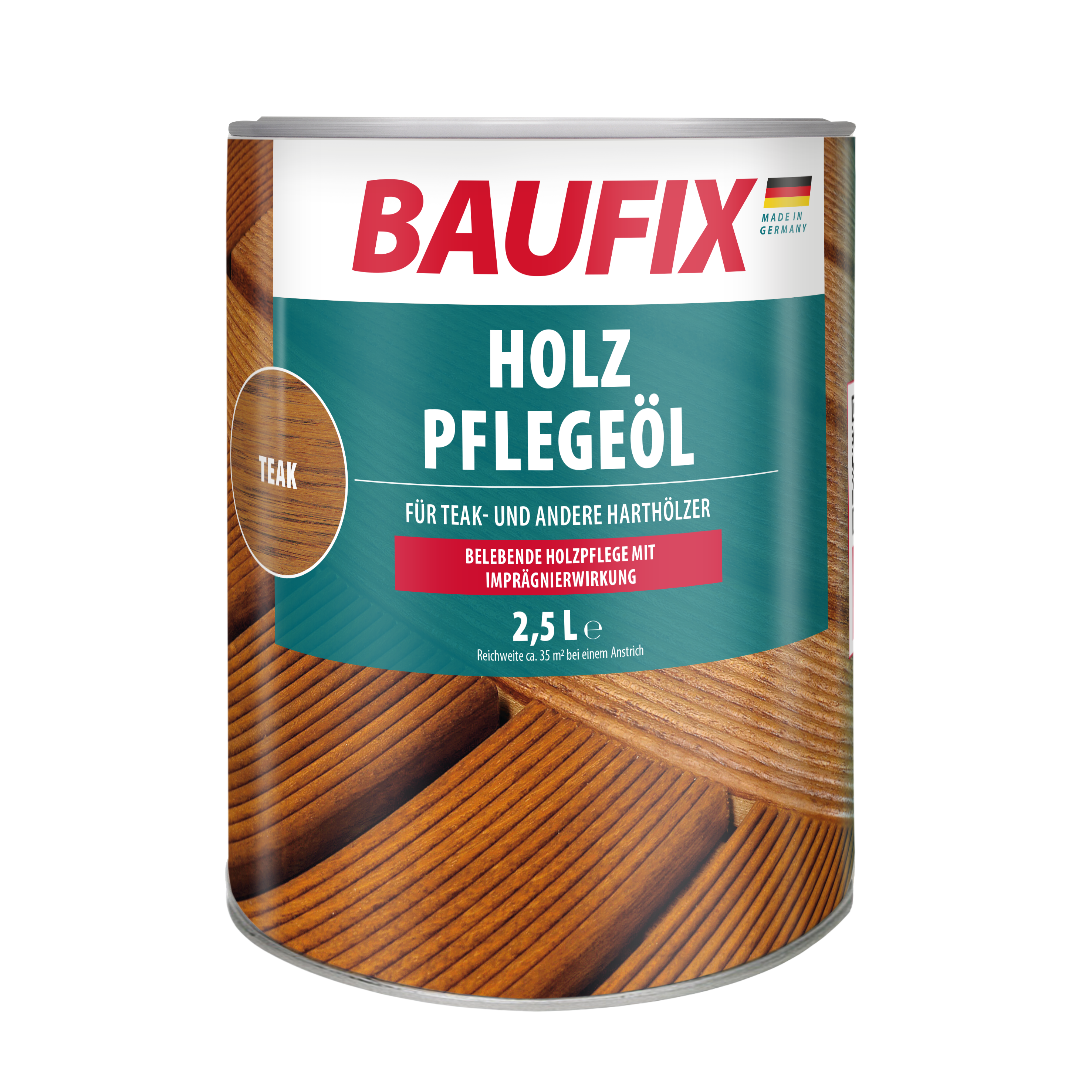
Unsere Holzöl: BAUFIX Holz Pflegeöl
- verstärkt den natürlichen Holzfarbton
- für Holzterrassen & -gehwege
- für Teak- & Harthölzer
- mit Imprägnierwirkung
- tiefenwirksame, belebende Holzpflege
- für außen & innen