
Heizkörper streichen: So wirds richtig lackiert
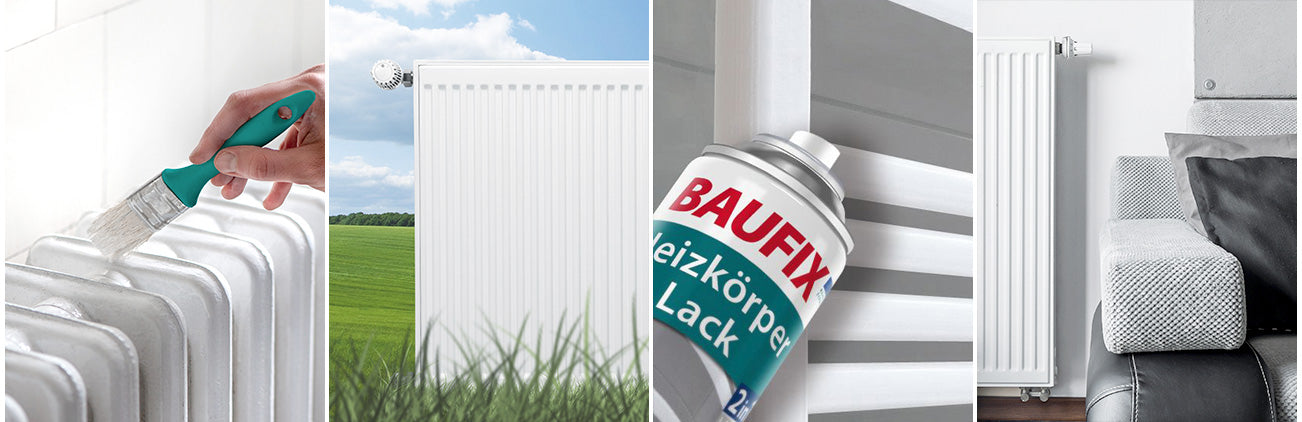
Ob an Wänden, Möbeln oder auch am Heizkörper – weiße Farbe ergraut, vergilbt, blättert mit der Zeit ab oder zerkratzt. Während die Wand einen neuen Anstrich bekommt und man die Möbel nachlackiert, stellt man sich oft die Frage, was man mit der Heizung machen kann. Tatsächlich kannst du schnell selbst Abhilfe schaffen. Wie die Wand, kann man auch den Heizkörper streichen. Mit hitzebeständigem und farbstabilem Heizkörperlack sorgst du für eine schöne Optik in jedem Raum. Mit klassisch seidenmattem Lack bietet BAUFIX auch einen Heizkörper Spraylack an, den du nicht mit Mühe auf den Heizkörper pinseln musst, sondern den du besonders einfach aufsprühen kannst.
Womit Heizkörper streichen: Klassischer Lack vs. Spraylack
Ob du deinen Heizkörper mit klassischem Lack streichen oder mit Spraylack besprühen möchtest, ist Geschmacksache und bleibt dir überlassen. Neben der unterschiedlichen Anwendungsweise gibt es jedoch weitere Unterscheidungsmerkmale, die deine Entscheidung eventuell beeinflussen können: Schwierigkeit des Farbauftrages, Temperatur der zu streichenden Rohre und die Trocknungszeit.
Die Verwendung von Spraylack scheint auf den ersten Blick leichter zu sein, ist sie aber nicht. Tatsächlich ist der Farbauftrag großflächiger und es muss dabei auf Gleichmäßigkeit geachtet werden. Zum Sprayen solltest du in jedem Fall eine Atemschutzmaske tragen, um dich vor dem feinen Sprühnebel zu schützen. Möchtest du Rohre streichen, die heißer als 80 Grad werden, solltest du zum Spraylack greifen. Für kühlerer Rohre reicht ein klassischer Lack aus.
Ein klarer Vorteil vom Sprühlack ist, dass er schneller trocknet und im Abstand von ca. 20 Min. können mehrere Schichten aufgetragen werden. Bei dem klassischen Heizungslack müssen mindestens 24 Stunden zwischen zwei Anstrichen liegen.
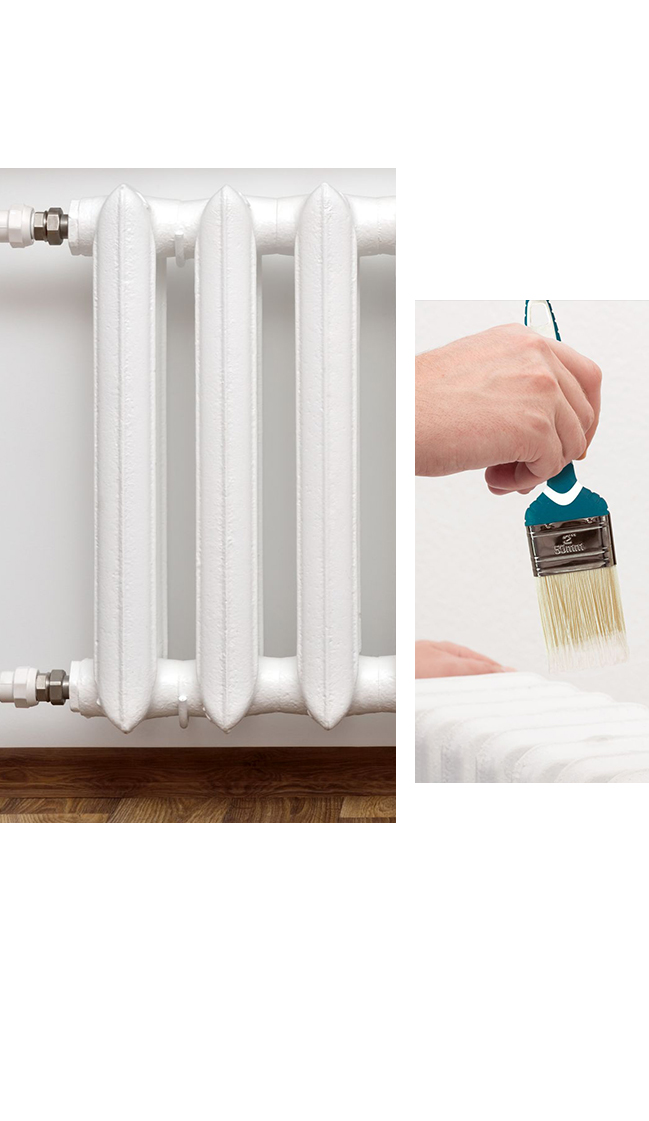
Schritt-für-Schritt-Anleitung zum Heizkörper streichen
Um fachgemäß den Heizkörper streichen zu können, solltest du, bevor du mit dem Anstrich beginnst, ein wenig Vorarbeit leisten. Denn wenn du deinen Heizkörper streichen möchtest, tust du das wahrscheinlich nur, wenn deutliche Altersspuren zu erkennen sind. Im Folgenden erklären wir dir in einer kurzen Anleitung, wie Heizkörper streichen richtig funktioniert.
Schritt 1: Die Vorbereitung zum Heizkörper streichen
Zunächst klebst du alle Stellen, die du nicht lackieren bzw. sprayen möchtest – z.B. den Thermostat, sowie die Rückwand – mit Malerkrepp ab. Decke zusätzlich den Boden mit einer Folie ab. Bevor du mit dem Heizkörper streichen loslegen kannst, nimm den zu streichenden Heizkörper etwas genauer unter die Lupe und entferne Rost und losen Lack z.B. mit einer Drahtbürste. Damit die neue Farbe besser hält, kannst du mit einem flexiblen Schleifvlies die Oberflächen danach leicht anrauen.
Im Anschluss folgt eine gründliche Reinigung. Befrei den Heizkörper von Staub und allen Verschmutzungen und achte dabei auch auf schwer zugänglichen Stellen. Hat dein Heizkörper eine Oberfläche aus Eisen, Stahl oder Guss, musst du vor dem Heizkörper streichen zuerst mit einer Rostschutzgrundierung vorbehandeln.
Hinweis: Zum Heizkörper streichen muss die Heizung aus und vollständig abgekühlt sein.
Schritt 2: Heizkörper streichen: So benutzt du den Spraylack
Das Heizkörperlack-Spray kann bis zu 140 Grad vertragen und ist damit auch für extrem heiße Rohre geeignet. Hier funktioniert die Verarbeitung etwas anders. Sorge dafür, dass die Umgebung des Heizkörpers großflächig und gut abgedeckt ist, damit der entstehende Sprühnebel nicht den Boden, die Wand oder andere benachbarte Möbel oder Bauteile mit einfärbt. Vor dem Einsatz musst du die Dose zunächst drei Sekunden lang „freisprühen“, um die Farbe zu aktivieren. Den Heizkörper besprühst du nun aus einer Entfernung von 25–30 cm gleichmäßig und immer über Kreuz. Lasse den Lack antrocknen und bring dann, jeweils im Abstand von ca. 15 bis 20 Minuten, mehrere dünne Schichten auf. Wenn du fertig bist, dreh die Dose auf den Kopf und sprüh die Düse erneut drei Sekunden lang frei. Der Lack ist nach ca. 10 Minuten staubtrocken, grifffest nach 30–60 Minuten und durchgetrocknet nach etwa 24 Stunden.
Hinweis: Behalte während des Sprühvorganges die Fenster geschlossen, um eine Verbreitung des Sprühnebels zu vermeiden. Lüfte erst im Anschluss!
Wann du den Heizkörper streichen solltest
Der beste Zeitpunkt zum Heizkörper streichen ist der Sommer. Zum Anstrich sollten Heizkörper und Rohre nämlich immer kalt sein!
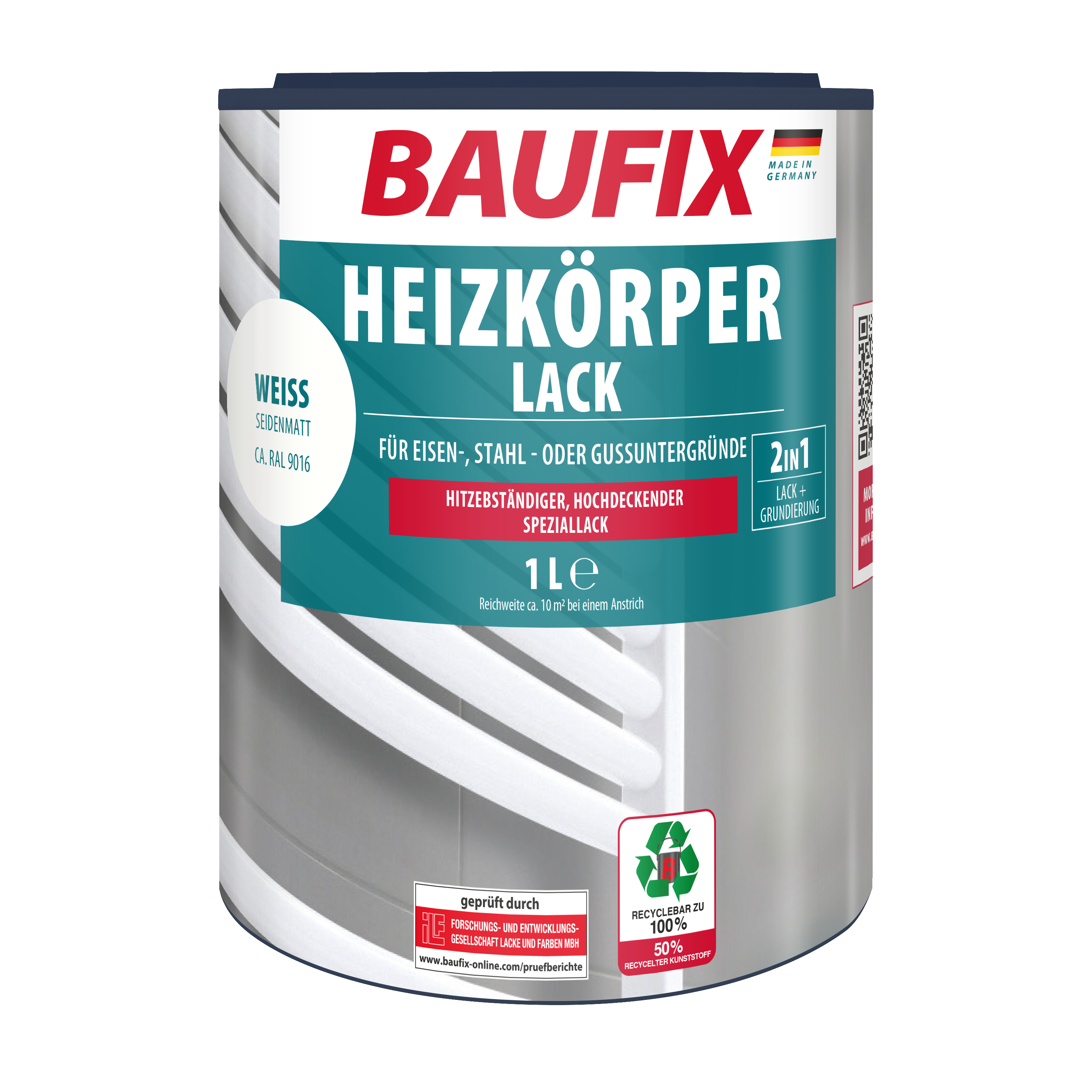
Unser Heizkörperlack: BAUFIX Heizkörper Lack seidenmatt
- hitze- & vergilbungsbeständig bis 80° C
- hohes Deckvermögen
- weiß-seidenmatt
- Acrylat-Farbe