
BAUFIX Buntlack -
Kreative Farbgestaltung leicht gemacht
Richtig lackieren: alle Infos von der Wahl des richtigen Buntlackes, über die Verarbeitung bis hin zur Lagerung
Du willst mehr Farbe in deinem Leben? Wir zeigen dir, wie sich Oberflächen mit Buntlacken richtig lackieren lassen. Denn mit den Beschichtungsstoffen verleihst du Möbeln, Zäunen, Wandverkleidungen und Co. nicht nur eine farbliche Frischekur, sondern kannst sie bei richtiger Anwendung vielseitig sowohl im Innenbereich als auch im Außenbereich anwenden. Das Beste an den Lackfarben: es ist nicht schwierig richtig zu lackieren. Die Lacke lassen sich einfach verarbeiten, überzeugen mit einer hohen Deckkraft und bieten sogar eine schützende Beschichtung. Nachfolgend verraten wir dir alles Wichtige über Buntlacke und geben dir Tipps & Tricks wie du gut und richtig lackieren kannst.
Was ist Buntlack und wofür eignet er sich?
Um richtig zu lackieren, ist zunächst die Wahl des richtigen Lacks von großer Bedeutung. Buntlacke bestehen aus einer Mischung von Bindemitteln, Lösemitteln, Füll- und Zusatzstoffen, denen Farbpigmente beigefügt werden. Diese sind in genormten RAL-Farben klassifiziert. So entsteht später bei der Lackschicht die ausgewählte Farbe. Es gibt jedoch auch umweltfreundliche Varianten, die aus Reinacrylat mit umweltgerechter Rezeptur und aus nachhaltiger Rohstoffproduktion hergestellt werden. In diese Kategorie zählt auch der BAUFIX Buntlack.
Je nach Art haben die Produkte neben der dekorativen und farbigen Lackschicht unterschiedliche Vorteile:
- Wetterbeständigkeit
- Temperaturbeständigkeit
- UV-Beständigkeit
- Maßhaltigkeit
- Starke Deckung
- Vergilbungsbeständigkeit
- Stoßbeständigkeit
- Schlagbeständigkeit
So sorgen die Schutzlacke nicht nur für farbenfrohe Highlights im Innen- und Außenbereich, sondern bieten deinen Materialien einen rundum Schutz. Apropos Material: Die Farbmittel lassen sich problemlos für Holz, unterschiedliche Metalle und sogar als Anstrich für Kunststoffe einsetzen.
Richtig lackieren: Die vielfältigen Einsatzmöglichkeiten von Buntlack
Heimwerker und Profis schwören gleichermaßen auf den Einsatz der Buntlacke. Einerseits lassen sich diese einfach verarbeiten, meist mit Pinsel, Farbrollen oder als Sprühlacke in einer Spraydose, anderseits zeigen sie ihre erstklassigen Eigenschaften auf diversen Untergründen, sodass die Lackierung vielseitige Möglichkeiten bietet. Holz, Metall, Kunststoffe, Beton und Mauerwerk – für die Farbprodukte kein Problem. Mit diesen Lacken wird dir richtig lackieren also einfach gemacht.
In 2 Schritten zum richtigen Lack
Wenn du eine Oberfläche richtig lackieren möchtest, solltest du nicht einfach blind drauf loslegen, sondern dir zunächst einige Gedanken machen. Welches Material hat die zu streichende Oberfläche? Befindet sie sich im Innen- oder Außenbereich? Welcher Buntlack eignet sich am besten? Die Frage nach dem richtigen Lack ist tatsächlich die Wichtigste, um richtig zu lackieren. Im Folgenden erklären wir dir deswegen ausführlich, was du bei der Wahl des Buntlackes zu beachten hast und welche Vor- und Nachteile verschiedene Lacktypen aufweisen. Danach zeigen wir dir, wie du die zu lackierende Oberfläche richtig vorbereitest und sie letztendlich richtig lackieren kannst.
Glänzende, seidenmatte oder matte Lacke: richtig lackieren mit dem passenden Glanzgrad
Buntlacke kommen in unterschiedlichen Glanzgraden daher. Es gibt Glanzlacken, die eine hochglänzende Oberfläche zaubern, besonders elegant wirken und deutlich widerstandsfähiger sind sowie seidenmatte und matte Buntlacke, die eher dezent in den Vordergrund treten. Welche Wahl du triffst hängt dabei einmal von deinem persönlichen Geschmack, aber auch der Stoßbeständigkeit ab, die du für die Oberflächenbeschichtung benötigst.
Wissenswert: Der Glanzgrad gibt an, wie stark einfallendes Licht vom Lack reflektiert wird. Die Bestimmung ist daher ein wichtiges Merkmal der Oberflächenbeschichtung, die du in jedem Fall beachten solltest, wenn du richtig lackieren möchtest. In der Regel reflektieren hochglänzende Oberfläche das Licht gleichmäßig in eine Richtung, während matte Fläche diese eher unregelmäßig verteilen. Weil die Wahrnehmung oft von Person zu Person unterschiedlich ist, wird der genaue Grad mit einem Reflektometer bestimmt.
Richtig lackieren: Acryllack, Kunstharzlack oder Maschinenlack?
Bei den Buntlacken unterscheidet man zwischen Acryllack, Kunstharzlack und Maschinenlack. Je nach Zwecke und Einsatzort bietet sich eine andere Lackschicht auf den von dir gewählten Untergrund an. Es gibt Lacke für den Außen- und Innenbereichen und welche, die für beide Bereiche infrage kommen. Achte dazu auf die Deklaration der Produkte. Bei Metall kann eventuell ein spezieller Metalllack sinnvoll sein, um richtig zu lackieren. Nachfolgend wollen wir die Unterschiede aufzeigen und die Vor- und Nachteile verdeutlichen. So kannst du dir eine fundierte Entscheidung treffen, damit du richtig lackieren kannst und dir dein Projekt garantiert gelingt.
Richtig lackieren mit Acryllack: Vor- und Nachteile
Acryllacke sind auf Wasserbasis, daher besonders umweltfreundlich, wie zum Beispiel unser BAUFIX Buntlack. Das bedeutet, dass der wasserbasierende Lack beim Auftragen flüssig ist. Das Produkt kann sogar nachträglich noch mit Wasser verdünnt werden. Vor allem die geringe Geruchsbildung ist im Innenbereich ein echter Vorteil. Gleichzeitig überzeugt die Variante auf Wasserbasis nach dem Anstrich mit einer hohen Witterungs- und UV-Beständigkeit und einer schnellen Trocknungszeit. Daher macht der Buntlack selbst im Außenbereich eine gute Figur.
Der Anstrich mit den Lacken ist jedoch meist im Verlauf nicht so optimal. Auch in Sachen Belastbarkeit stehen sie den anderen Varianten in einigem nach. Die Deckschicht ist etwas geringer
Richtig lackieren mit Kunstharzlack: Vor- und Nachteile
Kunstharzlacke sind lösemittelbasierte Lacke. Sie sind zähflüssig und lassen sich nicht verdünnen. Was diese besonders gut können, ist sich als eine robuste und strapazierfähige Oberfläche auf Materialien zu legen und diese damit stoß- und schlagfest zu machen. Nach dem Aushärten hält der Untergrund selbst den stärksten Beanspruchungen stand. Da der Lack elastisch bleibt, eignet er sich ohne Probleme für den Holzanstrich und schützt das Material vor Rissen. Weil die Lacke ebenso hitzebeständig sind, ist selbst eine Verarbeitung an Heizkörpern zu empfehlen. Nachteil ist, dass der Schutzlack einen stärkeren Geruch bei der Verarbeitung entwickelt und eine längere Zeit zum Trocknen benötigt.
Wofür verwende ich Maschinenlacke?
Sie möchten Maschinen oder Geräte mit einer Lackschicht wetterbeständig machen und somit vor Rost schützen? Oberflächen wie Stahl, Eisen, Aluminium und Zink lassen sich mit sogenannten Maschinenlacken hervorragend und richtig lackieren.

Richtig lackieren: Welche Pinsel und Rollen benötige ich für Buntlacke?
Nachdem Sie den für Ihre Zwecke am besten geeigneten Lack gewählt haben, geht es nun an das richtige Lackieren. Buntlack lässt sich unkompliziert mit einem Pinsel oder einer Rolle auftragen. Beachte, dass das Streichzubehör bei der Verwendung von Acryllack deutlich einfacher zu reinigen ist. Dazu reichen bereits warmes Wasser und Seife. Bei den anderen Optionen ist zur Reinigung Lösungsmittel notwendig.
Wir empfehlen dir bei großen Flächen zu Lackierwalze oder einem Flachpinseln zu greifen. Je nachdem mit welchem Lack Du arbeitest, verwende einen Acrylpinsel aus Kunststoff-Fasern oder ein Gemisch aus Naturborsten und Kunststoff.
Bei Kunstharzlack empfiehlt sich ein Naturborstenpinsel. Entsprechendes Zubehör findest Du zum Beispiel in unserem Malerwerkzeug-Bedarf. Die Oberflächen von Heizkörpern lassen sich mit Heizkörperpinseln richtig lackieren.
Reinigung & Grundierung: mit diesen Vorbereitungen lassen sich Oberflächen richtig lackieren
Um Oberflächen richtig lackieren zu können, muss nach der geeigneten Lackwahl, die Oberfläche vorbereitet werden. Dabei ist es wichtig, dass diese sauber und eben ist.
Reinigung und Entfernung alten Lackes, um richtig zu lackieren
Wenn du mit der Arbeit beginnst, reinige zunächst gründlich die Oberfläche, die du streichen möchtest. Danach sollte diese richtig gut getrocknet werden. Sollte die Oberfläche zuvor schon einmal lackiert worden sein, muss diese Schicht zunächst gründlich entfernt werden. Greife dazu am besten bei wasserbasiertem Lack auf Wasser und Spülmittel und bei lösemittelbasiertem Lack auf Lösungsmittel bzw. Abbeizmittel zurück. Dieses lässt sich einfach auftragen und Du kannst den Lack nach der Einwirkzeit mit Wasser und Spachtel abtragen. Das Abschleifen bietet sich nur bei entsprechenden Oberflächen an, die du mit dem Schleifgerät nicht beschädigen kannst.
Wegschleifen von Unebenheiten, um richtig zu lackieren
Um ein optimales, glattes Lackierergebnis zu erhalten, muss der Untergrund eben sein. Mit Schmirgelpapier, einem Schleifgerät oder einem Schleifklotz können Sie Unebenheiten ausbessern. Ferner müssen kleine Risse mit Spachtelmasse geschlossen werden.
Grundierung, um richtig zu lackieren
Um die Haftbarkeit zu erhöhen und eine leichtere Verarbeitung zu gewährleisten kann eine Grundierung sinnvoll sein. Hierzu eignet sich eine schadstoffarme Universalgrundierung oder bei Metallen eine Rostschutzgrundierung.
Du möchtest nicht so lange warten, bis die Grundierung getrocknet ist, bevor du loslegen kannst? Mit 2-in-1 Produkte, wie den BAUFIX Buntlack wird die Grundierung vor dem Auftragen des Lacks überflüssig. Er ist direkt verarbeitungsfertig und sorgt auch ohne Grundierung für eine hohe Haftbarkeit.
Richtig lackieren:
So trägst du den Lack auf
Nachdem du alle notwendigen Vorbereitungen getroffen hast, steht nun der Lackauftrag an. Je nachdem um welche Oberfläche es sich handelt, gehst du dabei etwas anders vor. Bei größeren Flächen empfiehlt es sich, in einer Ecke zu beginnen und sich von dort schrittweise vorzuarbeiten, um ein gleichmäßiges Ergebnis zu erhalten. Bei kleineren Flächen beginnst du mittig und arbeitest dich nach und nach nach außen vor. Grundsätzlich gilt bei mehrfarbigem Anstrich: mit der helleren Farbe wird begonnen, um richtig zu lackieren
Wie lagere und entsorge ich Buntlacke?
Stelle Lacke an einen kühlen und frostfreien Ort. Achte darauf nach dem Lackieren das Gebinde luftdicht zu verschließen. Nur so wird das Austrocknen verhindert. Je nachdem können ungeöffnete Lacke zwei Jahre und geöffnete Dosen bis zu zwölf Monate verwendet werden. Die Entsorgung erfolgt im eingetrockneten Zustand über den Hausmüll. Bringe flüssige Lacke zum örtlichen Wertstoffhof. Im Zweifelsfall wähle der Umwelt zuliebe immer die letzte Möglichkeit.
Du hast Lust auf frischen Wind in deinem Eigenheim? Dann ran an den Buntlack! Stöber gleich durch unser Sortiment und entdecke die Farbvielfalt und Varianten der BAUFIX Lacke. Wir wünschen dir viel Spaß mit deinem Projekt und beraten dich gerne bei all deinen Fragen.
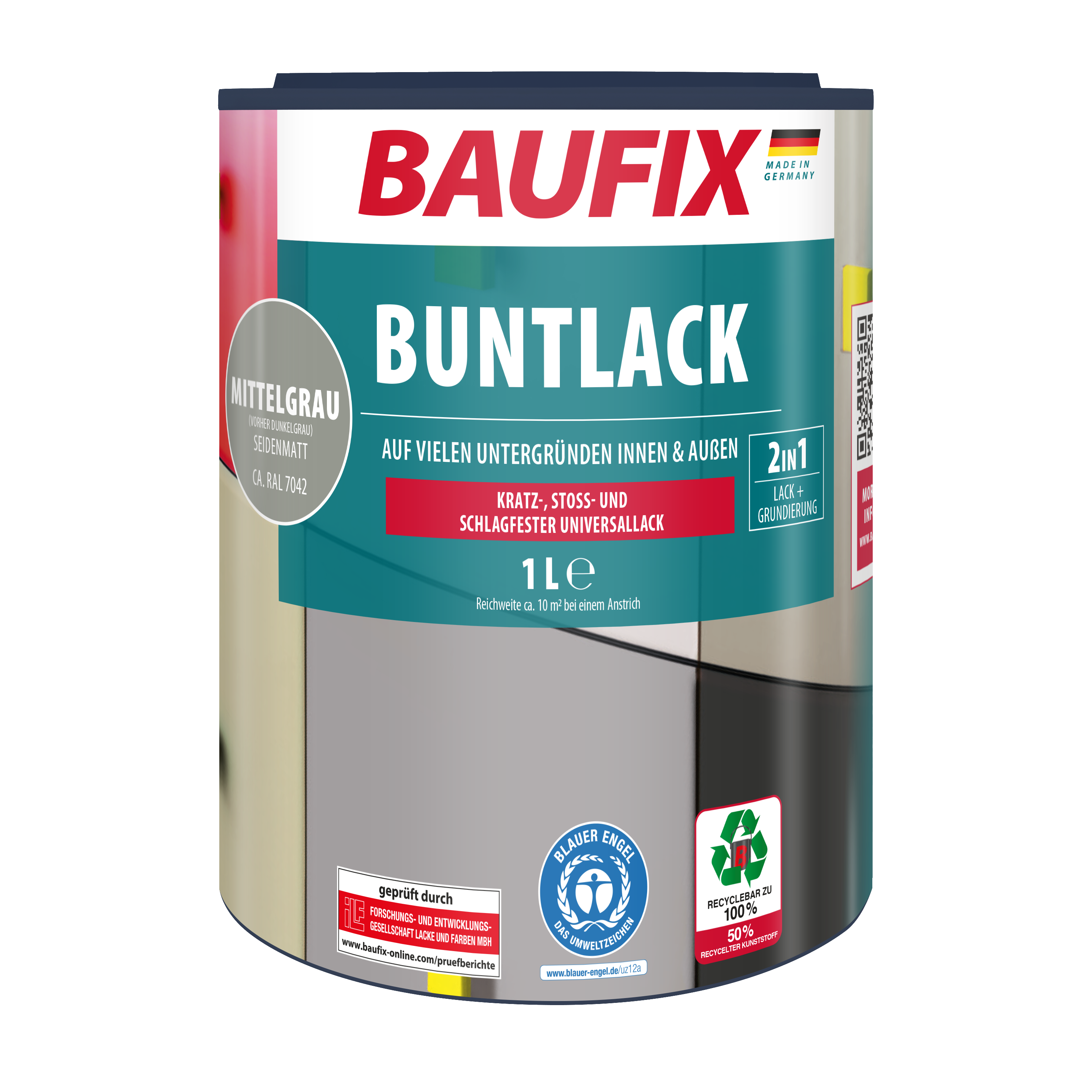
Unser Buntlack: BAUFIX Buntlack seidenmatt
- schnellere Durchhärtung: 2 Anstriche pro Tag möglich
- für Holz, Beton, Eisen, Mauerwerk usw.
- für außen & innen