
Badezimmer Farbe - Verwendung & Empfehlung
Inhalt
Badezimmer Farbe: Über die Verwendung von Wandfarbe im Badezimmer
Das Badezimmer gehört zu den wichtigsten Räumen eines Hauses. Hier bereiten wir uns auf den Tag vor, verbringen entspannte Stunden oder machen uns für einen besonderen Abend fertig. Viele zaubern aus ihrem Badezimmer eine echte Wellness- und Wohlfühloase, andere wiederum legen großen Wert auf ein hohes Maß an Funktionalität. Auch wenn Geschmäcker bei der Badezimmergestaltung auseinander gehen, haben sie alle eins gemeinsam: In den Feuchträumen bedarf es dem Einsatz spezieller Badezimmer Farbe, die auch als Feuchtraumfarbe bezeichnet wird. Warum das so wichtig ist, welche Badezimmer Farben es gibt und was Du beim Kauf und der Verwendung der Anstriche noch beachten musst, erfährst Du in unserer nachfolgenden Übersicht über Badezimmer Farben.
Warum muss es eine spezielle Wandfarbe für Feuchträume sein?
Sogenannte Feuchträume, wie das Badezimmer, haben einen besonders hohen Anspruch an Wandfarben. Die Räume weisen eine stetig hohe Luftfeuchtigkeit – und damit Regenwaldklima – auf. Verwendest du in den Räumen herkömmliche Dispersionsfarbe mit einem niedrigen pH-Wert, zieht Feuchtigkeit schnell in den Anstrich ein und bietet damit den optimalen Nährboden für Schimmel. In der Küche kommt noch zusätzlich der Fettanteil im Wasserdampf dazu, der die besten Wachstumsbedingungen für Schimmel bietet. Schimmel an Untergründen ist nicht nur unansehnlich, sondern wird auf Dauer sogar gefährlich für die Gesundheit. Gelangen Schimmelsporen in die Luft, kann das zu Allergien und chronischen Atemwegserkrankungen führen.
Wasserabweisende Farbe für das Bad
Um der Schimmelbildung den Kampf anzusagen, dieser vorzubeugen und eine starke Durchfeuchtung zu vermeiden, wurde spezielle Badezimmer Farbe entwickelt. Diese stößt Feuchtigkeit und Schmutz zuverlässig ab, ist wasserbeständig und entzieht Schimmel damit den Nährboden. Anders als Dispersions-Farbe bietet sie ausreichend Schutz vor Feuchtigkeit und ist zudem scheuerbeständig, abriebfest, atmungsaktiv und abwaschbar.
Im Handel ist die schimmelhemmende Farbe unter dem Namen BAUFIX Bad- und Küchenfarbe erhältlich. Bevor man die Farbe zum Einsatz bringt und die Wände von Feuchträumen streicht, gilt es, sich zwischen Feuchtraumfarben mit chemischen oder natürlichen Inhaltsstoffen zu entscheiden.
Badezimmer Farbe mit Fungiziden und Bioziden
Fungizide oder Biozide sind zwei chemische Stoffe in Badezimmer Farben, die verhindern, dass sich Schimmel und Pilze an der Wandfarbe bilden können. Sie bieten einen zuverlässigen Schutz und sind in einem geringen Maße enthalten, gerade so viel, dass eine Wirkung gewährleistet werden kann. Bei billigenAnti-Schimmel-Farbenwerden den handelsüblichenDispersionsfarbenInhaltsstoffe beigemischt, die schnell ein Gesundheitsrisiko darstellen können. Generell muss man bei Fungiziden oder Bioziden bedenken, dass diese permanent an die Umgebung abgegeben werden, was bei sensiblen Menschen und Allergikern zu Problemen führen kann. Bei führenden Herstellern wie BAUFIX ist die Badezimmer Farbe für Feuchträume eine extra abgestimmte und milde Rezeptur, um das Risiko von Schimmelbildung zu senken.
Im Handel ist die schimmelhemmende Farbe unter dem Namen BAUFIX Bad- und Küchenfarbe erhältlich. Bevor man die Farbe zum Einsatz bringt und die Wände von Feuchträumen streicht, gilt es, sich zwischen Feuchtraumfarben mit chemischen oder natürlichen Inhaltsstoffen zu entscheiden.
Badezimmer Farbe mit natürlichen Inhaltsstoffen
Badezimmer Farbe auf natürlicher Basis besteht aus mineralischen Bindemitteln und bietet durch den hohen pH-Wert, meist über 10, einen Schutz gegen Schimmelbildung. Gleichzeitig sorgt die Wasserdampfdurchlässigkeit für eine hohe Atmungsaktivität, was nachhaltig die Raumluft verbessert. Feuchtigkeit wird von der Badezimmer Farbe aufgenommen und wieder abgegeben. Der wohngesunde, schadstofffreie Anstrich zeigt sich zum Beispiel als Kalkfarbe oder Silikatfarbe.
Kalkfarbe
Kalkfarbe basiert auf Kalkhydrat und ist damit einer Mineralfarbe. Sie ist atmungsaktiv, hat einen hohen pH-Wert und ist diffusionsoffen. Feuchtigkeit wird bei diesen Badfarben aufgenommen und wieder abgegeben. Im Gegensatz zu chemischen Wandfarben sind sie umweltschonend und sorgen für ein wohngesundes Raumklima. Leider verlieren sie jedoch im Laufe der Zeit die schützende Wirkung. Kalkfarben sind zudem schwerer zu streichen, nicht scheuerfest und ätzend, weshalb du bei der Verarbeitung deine Augen und Hände schützen solltest. Die Farbe hat ebenso den Nachteil, dass sie nicht für alle Untergründe gleichermaßen geeignet ist und sich nach dem Streichen selten gut überstreichen lässt. Es gilt unter Farbexperten die Kenntnis: Kalk hält nur gut auf Kalk.
Silikatfarbe
Silikatfarben zählen zu den Mineralfarben und erhalten ihre schimmelhemmende und antibakterielle Wirkung ebenfalls durch einen hohen pH-Wert. Sie enthalten Kaliwasserglas, auch Kaliumsilikat genannt. Im Gegensatz zu Kalkfarben sind Silikatfarben nach dem Streichen scheuerbeständig und nach dem Trocknen abriebfest. Der Nachteil ist, dass beim Streichen der Wände und Decken mit Silikatfarbe besondere Schutzkleidung getragen werden muss, da der hohe pH-Wert ätzend ist. Gleichzeitig ist die Farbe nur für mineralische Untergründe geeignet und als Wandfarbe nur in speziellen Fachgeschäften erhältlich.
Latexfarbe
Als Badezimmer Farbe können neben Kalkfarben und Silikatfarben zudem scheuerfeste Acrylat-Latexfarben genutzt werden. Die Latexfarben überzeugen mit einer hohen Nassabriebbeständigkeit nach dem Trocknen. Sie sind wasserabweisend und scheuerbeständig. Statt als Badezimmer Farbe finden sie häufiger Anwendung in Räumen wie Treppenhäuser und Kinderzimmer, da hier die Flächen in der Regel starken Beanspruchungen ausgesetzt sind.
Worauf sollte ich beim Kauf von Badezimmer Farbe achten?
Beim Kauf der Badezimmer Farbe solltest du auf einige wichtige Punkte achten, um letztlich auch das beste Ergebnis zu erhalten. Bei der Auswahl der Farbsorte beachte folgende Kriterien:
Nassabriebbeständigkeit nach EN-Norm 13300
Ergiebigkeit
Glanzgrad
Farbton
Nassabrieb-beständigkeit
Die Nassabriebbeständigkeit ist in Klassen nach der EN-Norm 13300 eingeteilt und gibt an, wie beständig die Wandfarbe gegenüber mechanischen Abrieb ist. Feuchtraumfarben der Klasse 1 haben die größte Widerstandsfähigkeit nach dem Streichen auf dem Untergrund. Damit du von der Eigenschaft auf Putz und Wänden profitieren kannst, achte darauf, dass die Feuchtraumfarbe in den Klassen 1 und 2 ausgewiesen ist.
Inhaltsstoffe
Achtung: Schaue im Baumarkt oder online beim Kauf von Feuchtraumfarbe lieber zweimal hin. Hochwertige Badezimmerfarbe bzw. Feuchtraumfarbe wird als Bad- und Küchenfarbe ausgewiesen. Bei einer Anti-Schimmel-Innenfarbe werden meist normalen Dispersionsfarben schimmelabtötende Konservierungsstoffe beigemischt und preisgünstig als spezielle Farben für Feuchträume verkauft. Oft werden hierzu sehr kritische Giftstoffe verwendet, die gestrichen in die Raumluft gelangen.
Ergiebigkeit
Wie ergiebig eine Farbe ist, wird in den Deckkraftklassen festgehalten. Diese geben an, wie viele Quadratmeter mit einem Liter Farbe deckend gestrichen werden können. Es gibt 4 Klassen:
- Klasse 1: höchste Deckkraft mit mindestens 99,5 %
- Klasse 2: Deckkraft zwischen 98 und 99,5 %
- Klasse 3: Deckkraft zwischen 95 und 98 %
- Klasse 4: Deckkraft weniger als 95 %
Je höher die Deckkraft der Feuchtraumfarbe, desto weniger Anstriche benötigst du oder du kommst sogar mit einem Anstrich aus.
Glanzgrad
Der Glanzgrad gibt an, wie stark die Feuchtraumfarbe externe Lichtquellen reflektiert, dabei in eine Hauptreflexionsrichtung lenkt oder verstreut spiegelt. Handwerker wissen: Je weniger Licht gestreut wird, desto matter wirkt die Wandfarbe. Bei Feuchtraumfarbe kannst Du zwischen matt und seidenglänzend als schimmelhemmenden Anstrich wählen.
Farbton
Beim Farbton der Feuchtraumfarbe kannst du nach deinem eigenen Geschmack gehen. Selbst mineralische Badezimmer Farben zeigen sich heute bunt. Wenn du hingegen einen eigenen Farbton bevorzugst, ist selbst das kein Problem. Mische der Badezimmer Farbe einfach Farbpigmente bei, die alkaliresistent sind.
Welchen Untergrund kann ich mit Badezimmer Farbe streichen?
Feuchtraumfarbe ist vor allem für Wände wie Gips oder Putz nach einer ausreichenden Grundierung geeignet. Der Nachteil: Das Streichen von Raufaser Tapete mit Badezimmer Farbe geht leider nicht. Diese eignen sich generell nicht für Feuchträume, da sie einen hohe Zellulosegehalt aufweisen und das Kondenswasser zu Schimmel führen kann. Infrage kommen hingegen Vinyltapeten oder andere Kunststofftapeten die diffusionsoffen und mit der speziellen Wandfarbe gestrichen werden können. Farbe mit Silikat braucht zum Streichen mineralische Untergründe wie Stein, Beton, Kalk oder Kalkzementputz. Diese sollte jedoch nicht auf Gips verwendet werden.
Vorbereitung
Wichtig ist, dass der Raum vor dem Anstrich mit der Badezimmer Farbe trocken und alle Untergründe sauber sind. Schimmel solltest du in jedem Fall vorab entfernen. Dazu empfehlen wir dir den BAUFIX Schimmel Entferner. Zudem müssen Risse oder Löcher geschlossen werden.
Alte Tapetenreste sind zu entfernen. Für eine verbesserte Haftbarkeit kann eine Grundierung vor dem Anstrich Sinn ergeben. Natürlich solltest du Möbel, Leisten und Steckdosen, wie bei allen anderen Streichprojekten auch, gut mit Abdeckklebeband schützen.
Je nachdem, für welche Art der Badezimmer Farbe Du Dich entschieden hast, benötigst Du unterschiedliches Zubehör. Feuchtraumfarben mit schimmelhemmenden Mitteln sowie mit Silikat lassen sich einfach mit einer Farbrolle streichen. Feuchtraumfarben mit Kalk werden gut mit einer Deckenbürste auf dem Untergrund verarbeitet.
Auch das Entfernen von Feuchtraumfarben ist je nach Art unterschiedlich.
- Bei Silikatfarbe muss der Untergrund abgeklopft werden. Jedoch ist die Badezimmer Farbe langlebig und diffusionsoffen, sodass in der Regel kein Entfernen nötig ist. Die Farben lassen sich mit der gleichen Art von Wandfarbe überstreichen.
- Kalkfarbe ist meist abwaschbar. Ist das nicht der Fall, befeuchte die Badezimmerfarbe zunächst und trage den Anstrich mit Spachtel, einer Drahtbürste oder einem Schleifgeräte ab.
- Badezimmer Farbe als spezielle Bad- und Küchenfarbe kann einfach mit einem Spachtel entfernt werden.
Die Wandfarbe eignet sich sehr gut, um einen frischen und modernen Look in Badezimmer und Co. zu bringen und dennoch mit einer hohen Funktionalität zu punkten. Unsere BAUFIX Bad- und Küchenfarbe, die einen wirkungsvollen Filmschutz auf schimmelgefährdeten Flächen in Küche und Bad bildet, lässt sich mit bis zu 5 % Abtönfarben mischen. Dabei bleiben die schützenden Eigenschaften erhalten. Die lösemittelfreie Farbe überzeugt dank der ausgesuchten Inhaltsstoffe mit einem langanhaltenden Schutz und ist sowohl wasserverdünnbar, wasserdampfdurchlässig als auch geruchsarm und atmungsaktiv – ideale Bedingungen für einen schönen Anstrich deiner Wände.
Grundsätzlich gilt: Dunkle Farbtöne lassen Räume meist etwas kleiner wirken, während helle Farben Räume größer erscheinen lassen. Benutze in kleinen Räumen daher sämtliche Weißtöne sowie Pastelltöne und helle Farbvarianten. Ist dein Badezimmer sehr groß, kannst du satte Blau- und Grüntöne und andere dunkle Farbcharaktere verwenden.
Aktuell sind folgende Farbtypen besonders im Trend:
- Neutrale Töne: Farben wie Beige, Grau und Weiß sind zeitlos und schaffen eine beruhigende Atmosphäre.
- Dunkle Farben: Marineblau, Anthrazit und Schwarz verleihen dem Badezimmer ein elegantes und luxuriöses Ambiente.
- Natürliche Farben: Erdtöne wie Sand, Taupe und Olive bringen einen organischen und natürlichen Look ins Bad.
- Pastelltöne: Sanfte Farben wie Mintgrün, Hellblau und Rosé sorgen für eine frische und freundliche Stimmung.
- Akzentfarben: Mutige Akzente in Farben wie Türkis, Koralle oder Senfgelb setzen moderne und lebendige Highlights.
Ja, Kachelfliesen im Badezimmer können gestrichen werden. Es erfordert eine gründliche Reinigung, spezielle Fliesenfarbe (Kreidefarbe/-lacke) und eine Versiegelung, um langlebige Ergebnisse zu erzielen.
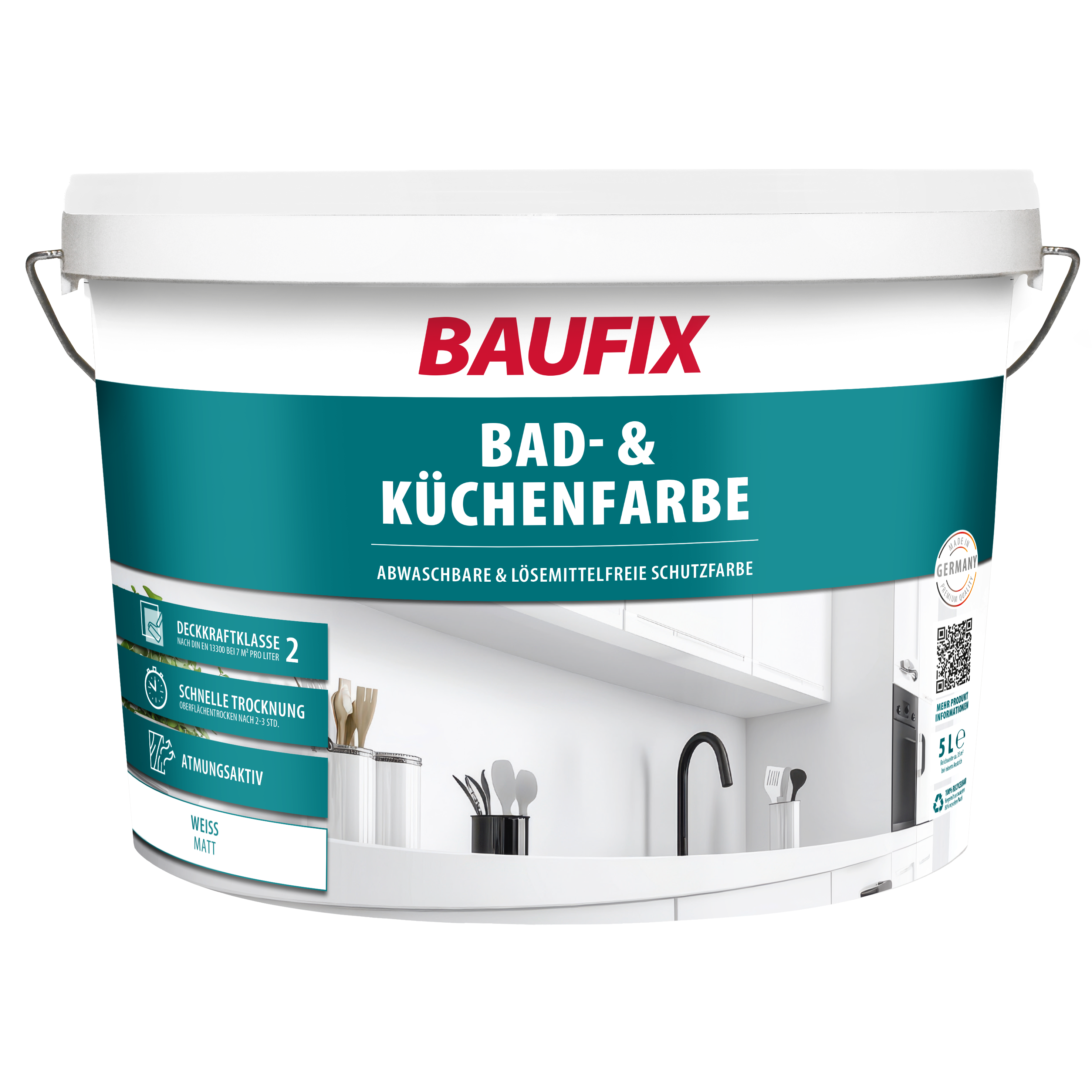
Unsere Badezimmer Farbe:BAUFIX Bad- & Küchenfarbe
- Deckfähigkeit Klasse II nach DIN EN 13300 bei 7 m²/l
- Nassabriebbeständigkeit Klasse III nach DIN EN 13300
- unanfällig gegen Schimmelpilzbefall
- für Bad, Küche, WC & Kellerräume
- wasserdampfdurchlässig
- abtönbar
- abwaschbar